
Crop Protection
Integrated Pest Management (IPM) for Rabi Crops: A Farmer’s Guide
By ATTPL Agritech Editorial Team · · 2 min read
A practical IPM approach for wheat, mustard, gram and spice crops: monitoring, traps, biological and cultural control, and safe, need-based pesticide use.
What IPM means
See also: Weed Management in Wheat: A Practical Guide for Rajasthan Farmers
See also: Garlic Farming in Rajasthan: A Rabi Season Guide
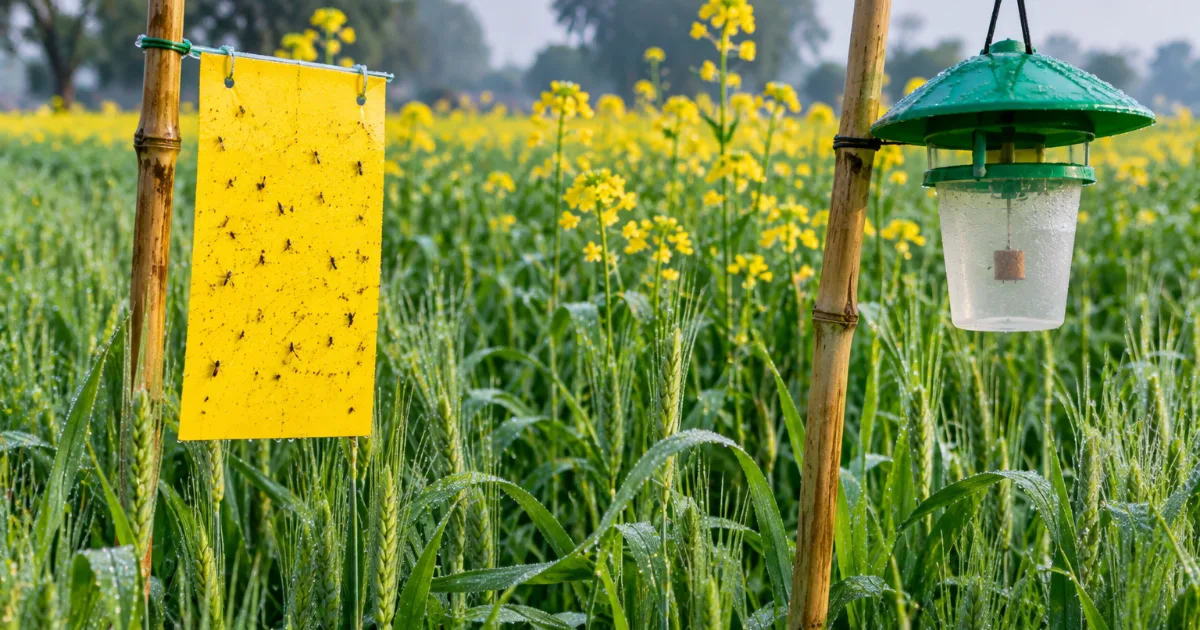
Integrated pest management combines several methods — prevention, monitoring, cultural, mechanical, biological and, only when needed, chemical control — to keep pests below damaging levels. It saves money, protects beneficial insects and reduces pesticide residues in food and soil.
Prevention starts before sowing
- Deep summer ploughing exposes pests and their eggs to sun and birds.
- Use healthy, treated seed; see our seed treatment guide.
- Follow recommended sowing time and spacing to avoid peak pest periods and crowding.
- Rotate crops and remove weed hosts from field borders.
- Use balanced fertiliser based on a soil test; excess nitrogen attracts sucking pests.
Monitoring and thresholds
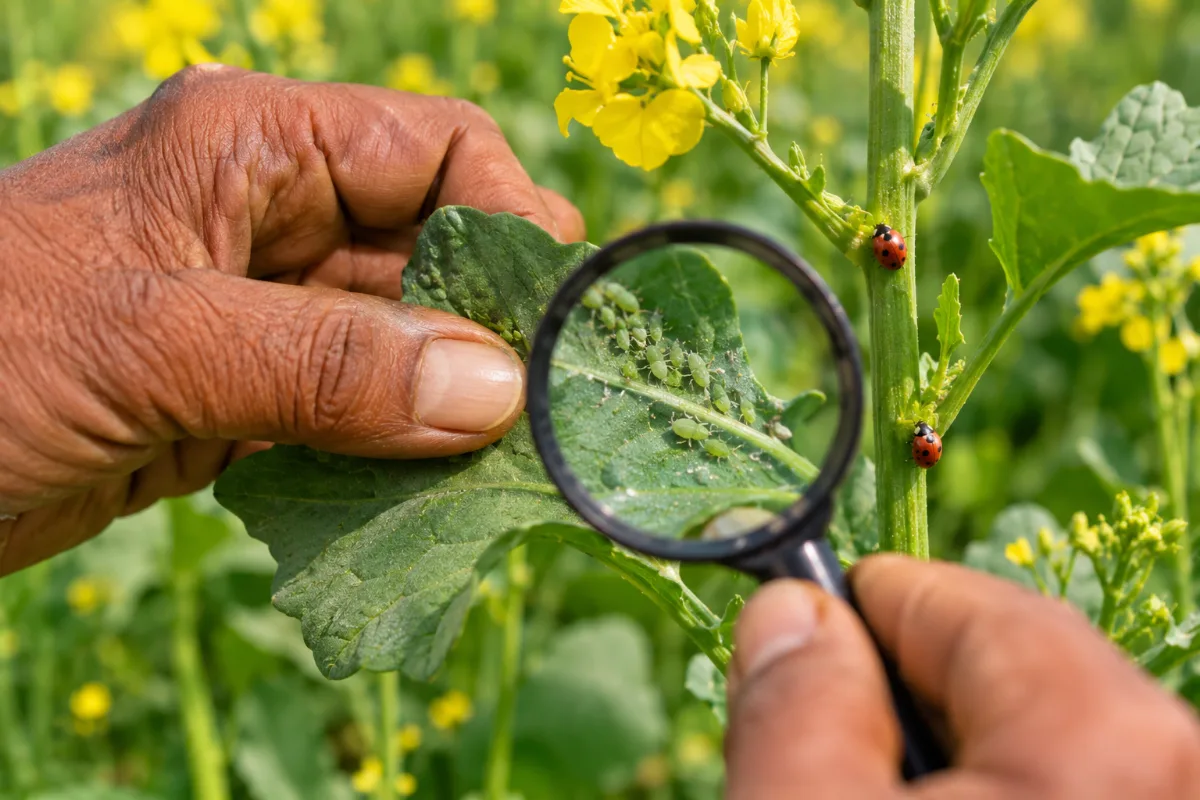
Walk the field at least once a week in a zig-zag pattern and look at plants closely. Yellow sticky traps help track aphids and whiteflies; pheromone traps help monitor pod borer in gram. Act only when pest numbers cross the economic threshold advised by agriculture department or KVK experts — not at the first sight of an insect.
Biological and mechanical control
- Conserve natural enemies such as ladybird beetles, lacewings and spiders by avoiding unnecessary sprays.
- Install bird perches in gram fields to help birds feed on caterpillars.
- Use neem-based products and recommended biopesticides early in an infestation.
- Hand-pick egg masses and larvae where practical.
Using pesticides safely
If spraying is necessary, use only products recommended for the crop and pest, at the labelled dose. Wear gloves, mask and full clothing, spray with the wind behind you, keep children and animals away and never reuse pesticide containers. Drones are increasingly used for spraying; read our guide on drones in agriculture for safety and economics. Observe the waiting period before harvest.
Crop-wise watch list
- Mustard: aphids during flowering and pod formation; see our mustard farming guide.
- Gram (chana): pod borer; use pheromone traps and bird perches; see the gram farming guide.
- Wheat: termites in light soils and aphids late in the season; see the wheat guide.
- Cumin and coriander: aphids and diseases such as wilt and blight.
Frequently asked questions
Does IPM mean no pesticides?
No. IPM uses pesticides only when needed, after other methods, and in the safest effective way.
How do pheromone traps help?
They attract male moths of specific pests, showing when populations are rising so you can act at the right time.
Where can I get IPM advice locally?
Your nearest Krishi Vigyan Kendra, agriculture department office and state agricultural university provide crop-specific advice.