
Crop Guides
Seed Treatment Before Sowing Rabi Crops: Farmer Guide
By ATTPL Agritech Editorial Team · · 4 min read
Why seed treatment before sowing rabi crops matters, the main methods, safety steps and how Rajasthan farmers can get correct advice from the KVK.
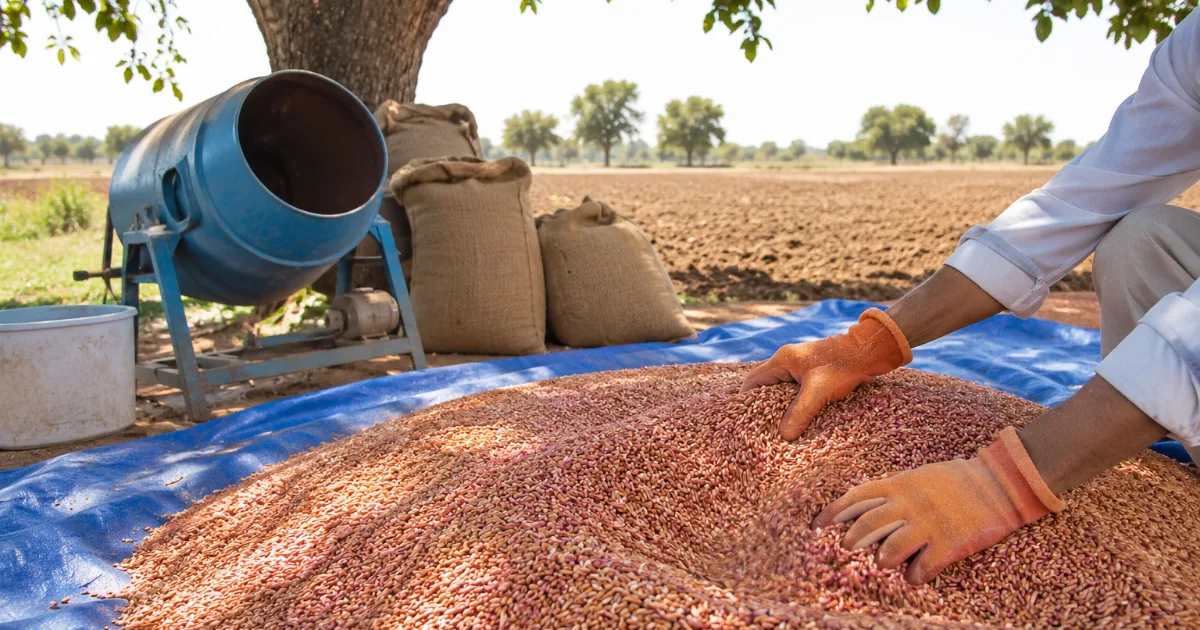
What Is Seed Treatment Before Sowing?
Every rabi season, farmers across Rajasthan invest in good seed for wheat, mustard, gram, barley, cumin and other crops. Yet seed-borne diseases, soil pests and poor germination can quietly reduce the crop before it even emerges. Seed treatment before sowing is a simple, low-cost step that protects young plants and supports a healthy start. This guide explains what seed treatment is, the main types, a safe step-by-step method, common mistakes, and where to get the correct product advice for your crop and district.
Seed treatment means coating or soaking seed with a protective or beneficial material before sowing. It can protect seed from fungi and soil insects, improve germination, and help some crops take up nutrients better.
Because the treatment stays close to the seed, a small quantity of material works where it is most needed. This is often more efficient than spraying the whole field later.
Main Types of Seed Treatment for Rabi Crops
- Fungicide treatment: protects against seed and soil-borne fungal diseases such as wilt, smut and root rot.
- Insecticide treatment: protects against soil pests like termites, which can be a problem in light soils.
- Bio-agent treatment: uses beneficial organisms such as Trichoderma to suppress disease.
- Bio-fertilizer treatment: Rhizobium for pulses like gram, and Azotobacter or PSB for cereals and oilseeds, to support nutrient availability.
- Physical methods: cleaning, grading and sometimes soaking or solar drying of seed.
Which product suits your crop depends on local disease pressure and soil. We do not give product names or doses here; please consult your nearest Krishi Vigyan Kendra (KVK) or agriculture department officer and follow the label.
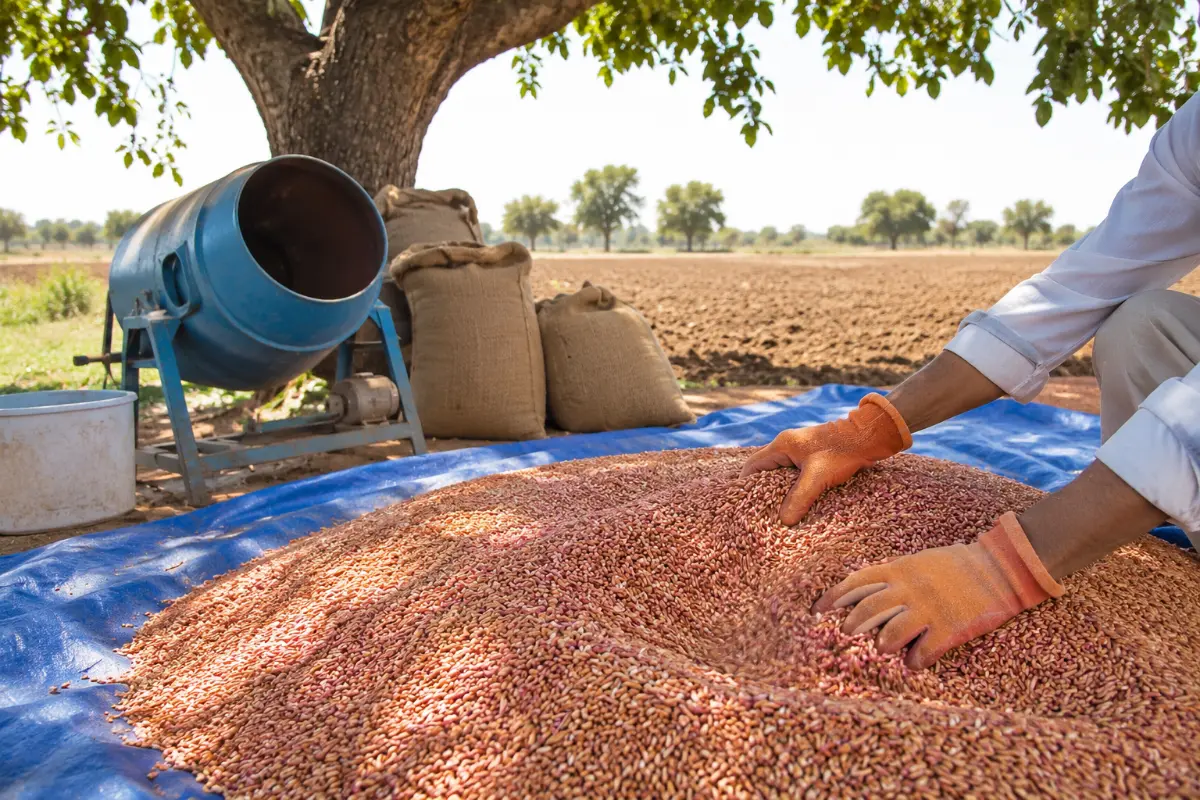
Step-by-Step Seed Treatment Method
When multiple treatments are advised, the commonly recommended order is fungicide first, then insecticide, and bio-fertilizer last, just before sowing. Always confirm the sequence with your KVK because some chemicals can harm beneficial organisms.
- Clean and grade seed to remove broken grains, weed seeds and dirt.
- Work in shade, on a clean tarpaulin or in a seed-treating drum.
- Mix the recommended material evenly so every seed gets coated.
- Dry treated seed in shade, not in direct harsh sun, especially after bio-fertilizer treatment.
- Sow treated seed on the same day or as advised.
For season-wise crop tips, the ATTPL kisan guide is a handy companion to this checklist.
Safety Precautions While Treating Seed
Seed treatment chemicals must be handled carefully. Wear gloves, a mask and full-sleeve clothing. Keep children and animals away, and never eat, drink or smoke while working.
- Never use treated seed as food or animal feed.
- Wash hands and tools well after use.
- Dispose of empty packets safely as instructed on the label; do not reuse them for food.
- Store leftover material locked away from homes and water sources.
Common Seed Treatment Mistakes to Avoid
- Using unknown or expired products bought without advice.
- Mixing chemicals and bio-fertilizers together without checking compatibility.
- Uneven coating, leaving many seeds untreated.
- Treating seed many days in advance and storing it in damp conditions.
- Skipping a germination check on saved seed.
A simple germination test helps: place a counted number of seeds between moist cloth or paper for a few days and see how many sprout. If germination is poor, change the seed lot before sowing.
Keep a short note of the seed lot, treatment used and date for each field. When you compare crop stand and disease later in the season, these notes help you and the KVK understand what worked.
Seed Treatment for FPOs and Group Planning
Farmer Producer Organisations can organise seed treatment camps, buy inputs in bulk and keep records for members. ATTPL's FPO operating system helps groups plan inputs and member activities in one place. New groups often need help with company and FPO registration services before they can trade formally.
Treated and untreated seed should also be stored correctly before sowing. For larger seed stocks, warehousing and storage services can keep material dry and organised. Once the crop is sown, efficient water use with agriculture solar pumping can reduce dependence on erratic power supply.
Get the Right Advice for Your Rabi Crop
The right seed treatment depends on crop, variety, soil and local disease history. Your KVK and agriculture department can give district-specific advice, and many organise free demonstrations before the rabi season.
Have questions about rabi planning, inputs or FPO activities? Reach out to the ATTPL Agritech team and we can help you find the right information and connect with local experts.
Key takeaway: Seed treatment before sowing is a small, low-cost step that protects rabi crops from seed and soil-borne problems. Use only KVK-recommended products, follow the correct order and handle chemicals safely.
Frequently asked questions
Is seed treatment necessary for wheat and mustard?
It is widely recommended because it protects young plants from seed and soil-borne diseases and pests. Your local KVK can tell you which treatment suits your district.
Can I mix fungicide and bio-fertilizer together?
Not without advice. Some chemicals can harm beneficial organisms, so bio-fertilizer is usually applied last. Always confirm compatibility with an agriculture expert.
How long before sowing should seed be treated?
Seed is generally treated shortly before sowing, and bio-fertilizer treatment on the day of sowing. Follow the label and KVK guidance for each product.