
Crop Guides
Garlic Farming in Rajasthan: A Rabi Season Guide
By ATTPL Agritech Editorial Team · · 2 min read
A practical guide to rabi garlic in Rajasthan — field choice, clove selection and sowing, irrigation, nutrients, common pests and diseases, harvesting, curing and storage.
Field and sowing
Garlic is an important rabi spice crop in the Hadoti region and other parts of Rajasthan. Good clove selection, timely irrigation and careful curing decide both yield and the price farmers get.
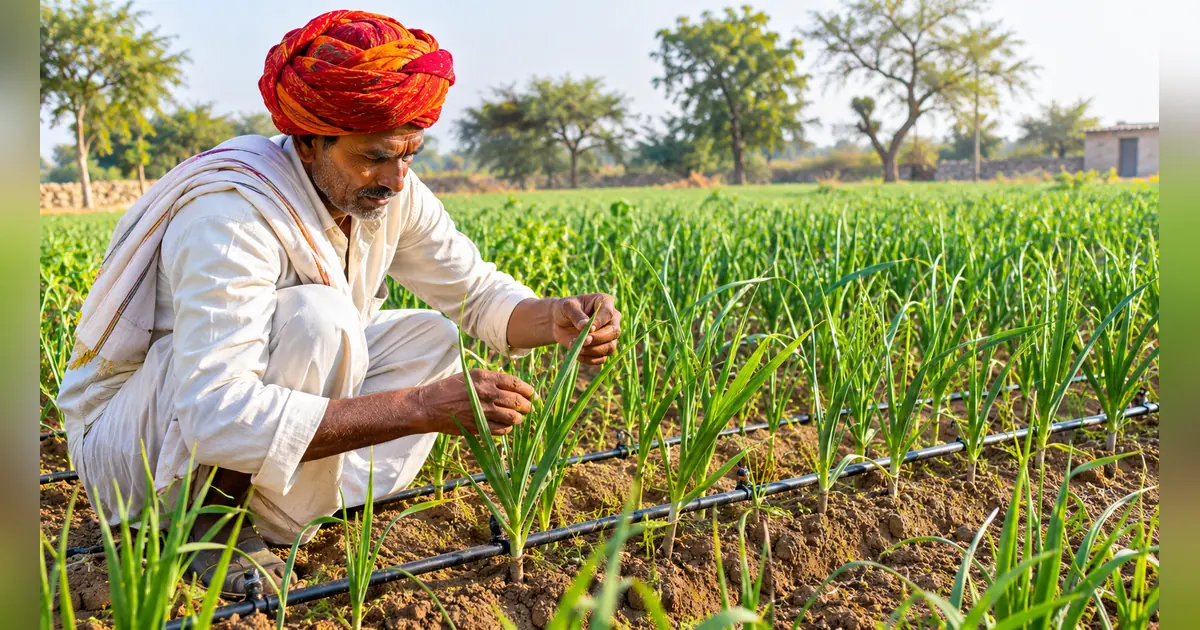
Garlic grows best in well-drained loam soil with good organic matter. Sowing is usually done from October to November. Use large, healthy outer cloves from a variety recommended for your area, and treat them before sowing as advised by your local agriculture department. Plant cloves upright at a shallow depth in rows; close spacing is common because the crop does not spread.
Water and nutrition
- Give a light irrigation soon after sowing, then water at regular intervals, avoiding waterlogging
- Drip irrigation saves water and suits garlic's shallow roots
- Apply well-rotted farmyard manure and fertiliser based on a soil test
- Stop irrigation some days before harvest so bulbs mature and cure well
Pests and diseases
Thrips and diseases such as purple blotch and leaf blight can reduce yield. Inspect the crop regularly, follow integrated pest management and use only recommended products at the right dose. See our IPM guide for rabi crops and get your soil tested before the season.
Harvest, curing and selling
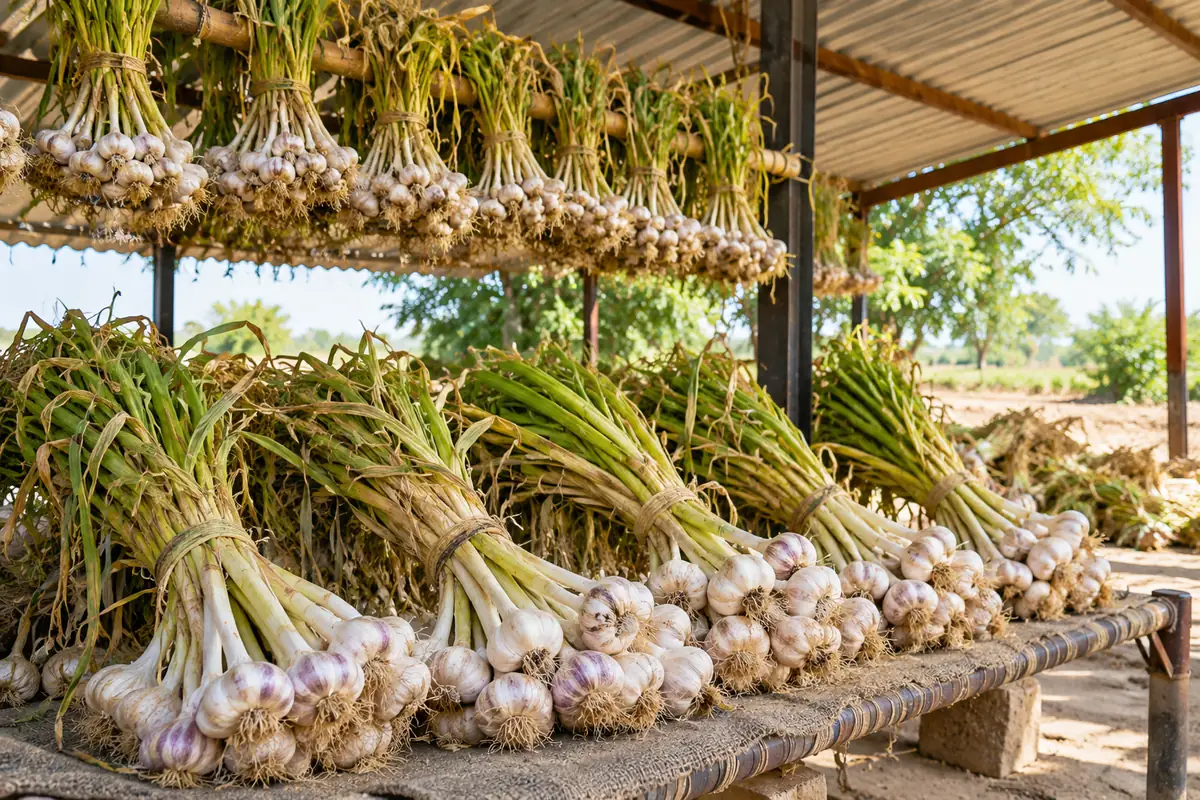
Harvest when most leaves turn yellow and bend. Cure bulbs in shade with good air flow before trimming and grading. Well-cured garlic stores longer and fetches better prices. Compare mandi rates and consider selling through e-NAM or your FPO.
Frequently asked questions
When is garlic sown in Rajasthan?
Generally in October and November, depending on the variety and local weather.
How long does garlic take to mature?
Usually about four to five months from sowing, depending on variety.
Why do stored garlic bulbs rot?
Poor curing, harvesting with high moisture and bad ventilation are common causes.
Sources and further reading
This article is general information for farmers, not agronomic advice. Varieties, doses and schedules differ by area; follow your local agriculture officer and KVK.