
Crop Guides
Methi (Fenugreek) Farming in Rajasthan: A Rabi Season Guide
By ATTPL Agritech Editorial Team · · 2 min read
Grow methi (fenugreek) in Rajasthan for seed or leaves: sowing time, varieties, seed treatment, nutrients, irrigation, disease control, harvest and marketing.
Why methi suits Rajasthan
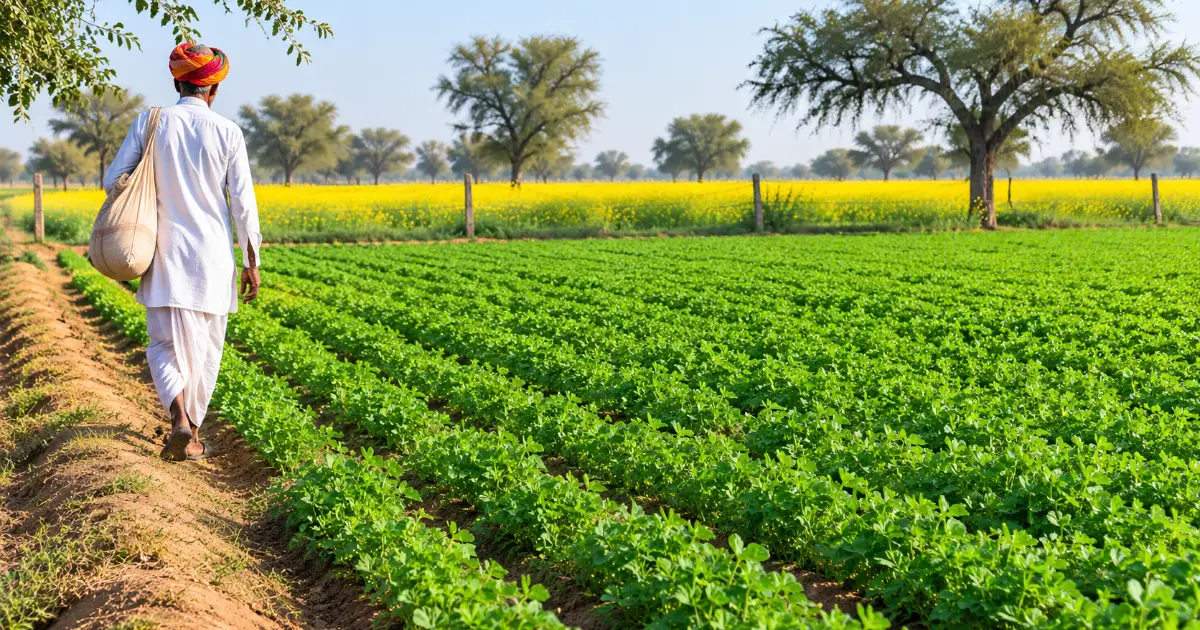
Methi (fenugreek) is one of Rajasthan's main seed spices, along with cumin, coriander and fennel. It is a short, hardy rabi legume that grows well in the cool, dry winter, needs moderate water and fixes some nitrogen in the soil. Farmers grow it for seed, which goes to spice, pharmaceutical and export markets, or as a leafy vegetable for nearby towns.
If you already grow coriander or cumin, methi fits well in the same rotation.
Sowing time, seed and varieties
- Sowing: usually from late October to mid-November in most districts; very late sowing reduces seed yield
- Soil: well-drained loam or sandy loam with good organic matter; avoid waterlogged or highly saline fields
- Seed rate: commonly about 20 to 25 kg per hectare for a seed crop, sown in lines about 20 to 30 cm apart
- Varieties: choose a variety recommended for your zone by the state agricultural university or Krishi Vigyan Kendra, such as the RMt series developed for Rajasthan; leafy types such as kasuri methi are grown for leaves
Treat seed with a recommended fungicide and Rhizobium culture before sowing. Our guide on seed treatment for rabi crops explains the order of treatment.
Nutrients and irrigation
Base fertiliser on a soil test and Soil Health Card. As a legume, methi needs only a small nitrogen dose and responds well to phosphorus and well-rotted farmyard manure. Give a light irrigation after sowing if soil moisture is low, and then irrigate according to soil and weather, usually four to six times in the season. Critical stages are branching, flowering and pod filling. Avoid over-irrigation, which encourages root rot.
Pests and diseases to watch
- Powdery mildew: white powder on leaves in dry, cool weather; spray a recommended fungicide at the first sign
- Downy mildew and root rot: avoid excess water and use treated seed
- Aphids: monitor colonies on tender shoots and follow integrated pest management
Use only products registered for the crop and follow the label. See our integrated pest management guide for rabi crops.
Harvest, cleaning and selling
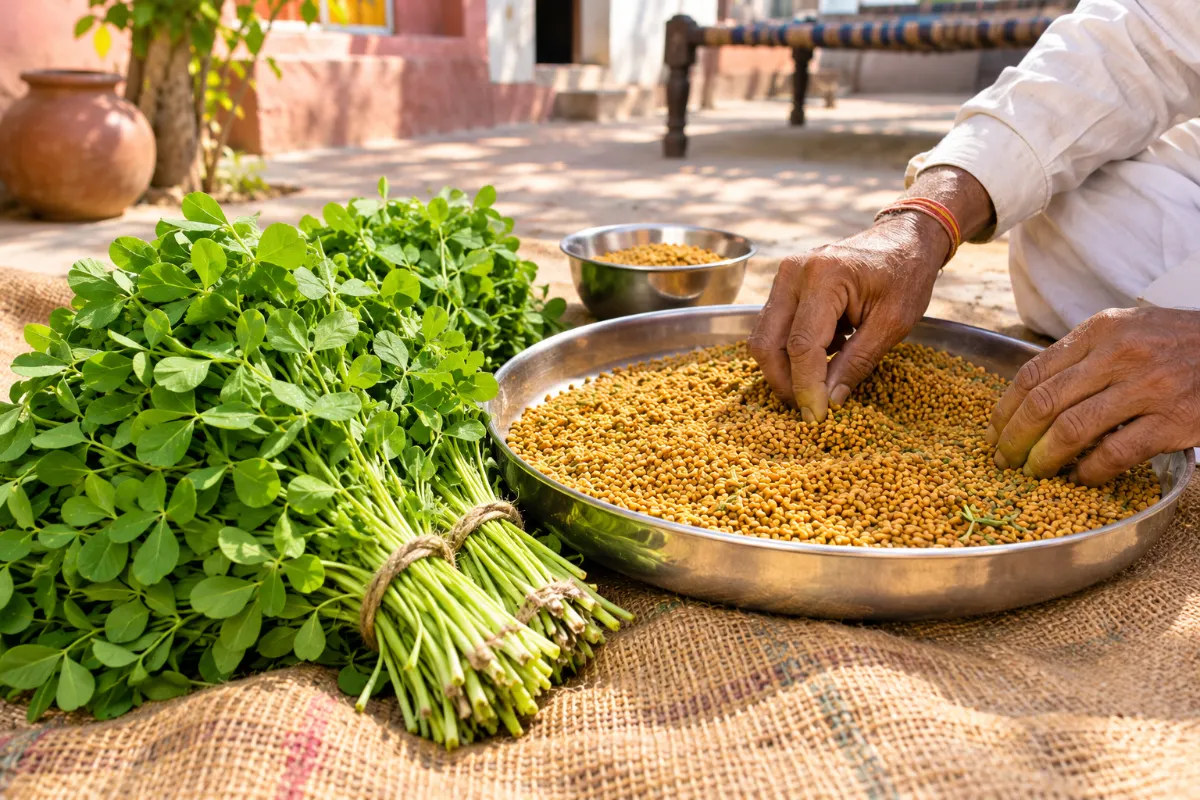
Leafy methi is cut from about 25 to 35 days after sowing. For seed, harvest when most pods turn yellowish and the lower leaves fall, dry the plants in the sun, thresh, clean and grade. Store seed dry, in clean bags off the floor, to keep colour and aroma. Compare prices at your mandi, on e-NAM and with spice traders or FPOs before selling, and keep records of yield and costs for next season.
How ATTPL Agritech helps
ATTPL Agritech is building farmer tools for advisory, market access and planning in Rajasthan. Read our guides on selling crops online through e-NAM and contact your local KVK for district-specific recommendations.
Frequently asked questions
When should methi be sown in Rajasthan?
Generally from late October to mid-November, depending on the district and temperature. Check with your local KVK.
How many irrigations does methi need?
Usually four to six, depending on soil and weather, with priority at branching, flowering and pod filling.
Can methi be grown for both leaves and seed?
Yes, but plan the field for one main purpose; cutting leaves heavily reduces seed yield.
Sources and further reading
This article is general information for farmers and agri businesses, not agronomic, financial or legal advice. Prices, schemes and weather change; check official sources and your local agriculture officer before acting.