
Crop Guides
Fennel (Saunf) Farming in Rajasthan: A Rabi Season Guide
By ATTPL Agritech Editorial Team · · 3 min read
A practical guide to growing fennel (saunf) in Rajasthan: soil, sowing time, seed rate, irrigation, pest care, harvesting, drying, grading and selling.
Climate and soil
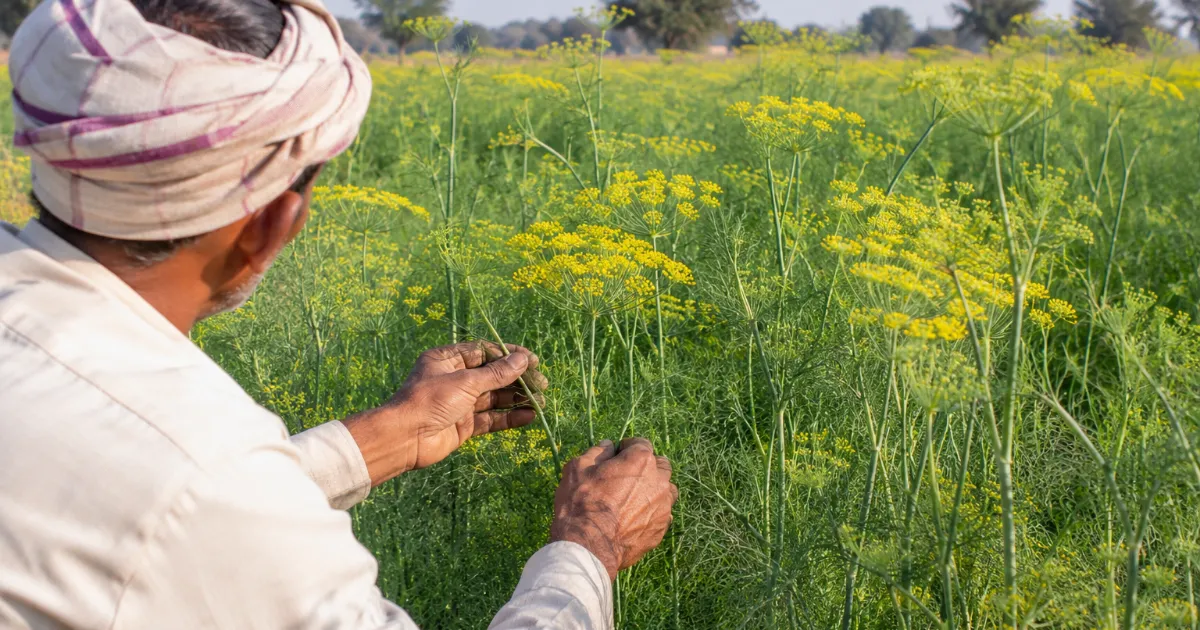
Fennel, known locally as saunf, is one of the most valuable seed spices grown in Rajasthan and Gujarat. It fits well into the rabi season, needs moderate water and earns a good price when the seed is clean, green and well graded. For farmers who already grow cumin or coriander, fennel can add diversity and spread risk across crops. This guide covers the main steps from field preparation to sale.
Fennel grows best in a cool, dry winter with clear skies at flowering and seed-setting time. Frost and cloudy, humid weather during flowering can reduce yield and invite disease. Well-drained loam or sandy loam soils with good organic matter are ideal; heavy waterlogged soils should be avoided.
- Get the soil tested before sowing; see our soil testing guide.
- Add well-decomposed farmyard manure or vermicompost during field preparation.
- Prepare a fine, level seedbed so that irrigation water spreads evenly.
Sowing time, seed and spacing
In most parts of Rajasthan, fennel is sown from early October to early November, depending on local temperatures. Use healthy seed of a variety recommended for your region by the state agriculture university or Krishi Vigyan Kendra (KVK). Seed treatment before sowing helps protect young plants from soil-borne diseases.
- Sow in lines to make weeding and irrigation easier.
- Keep row and plant spacing as advised for the chosen variety.
- Avoid very late sowing, which exposes flowering to warmer weather.
Irrigation and nutrition
Fennel needs light, regular irrigation, especially at branching, flowering and seed-filling stages. Over-irrigation encourages disease and lodging. Drip or sprinkler systems save water and improve uniformity; our guide to drip and sprinkler irrigation explains the options. Apply fertilisers based on the soil test, in split doses as recommended locally.
Weeds, pests and diseases
- Keep the field weed-free in the first six to eight weeks, when fennel grows slowly.
- Watch for aphids during flowering; consult the KVK before using any pesticide.
- Powdery mildew and blight can appear in humid weather; follow local advisories.
- Remove and destroy badly infected plants to limit spread.
Always follow label instructions and waiting periods for any approved crop protection product, so that the seed remains safe and saleable.
Harvesting and drying
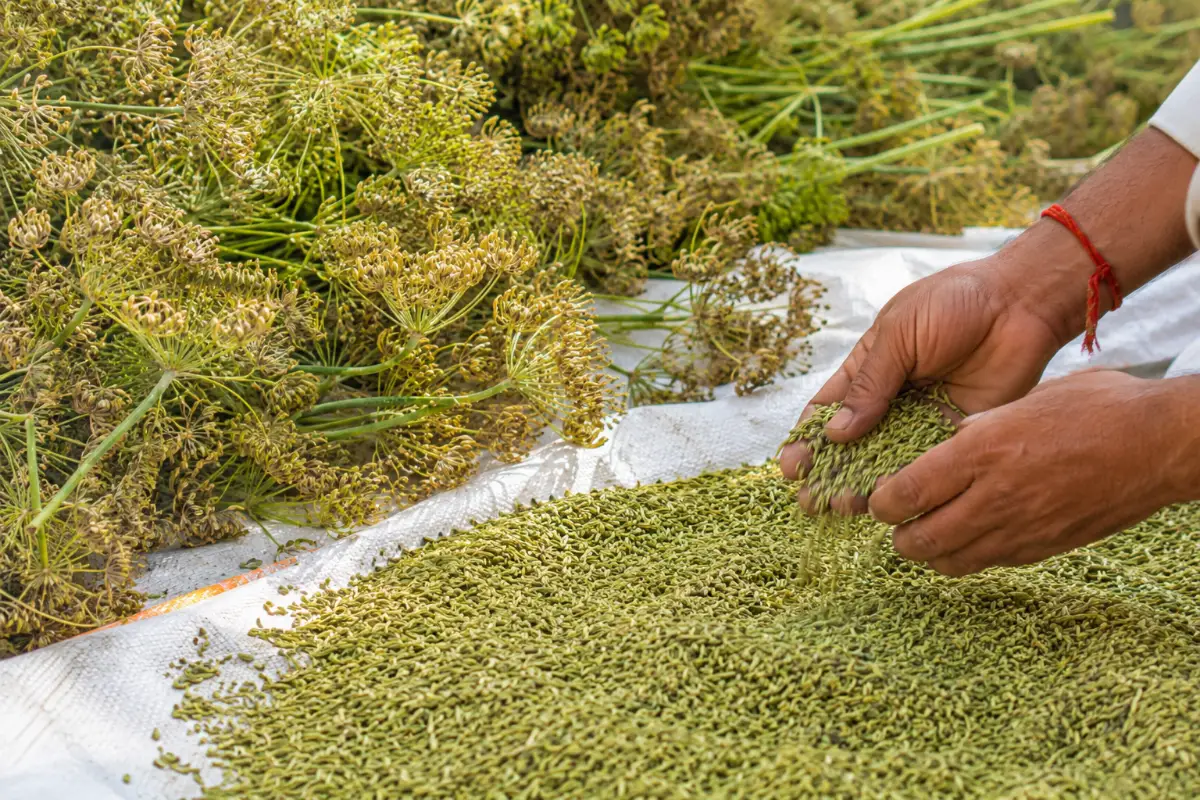
Fennel umbels ripen at different times, so harvesting is often done in two or more pickings. Harvest when the seed turns greenish-yellow and firm. Dry umbels in shade on clean tarpaulins to keep the green colour, which fetches better prices. Thresh gently, clean the seed and store it in dry, clean bags away from moisture.
Common mistakes to avoid
Many fennel losses come from avoidable errors rather than bad luck. Learning from experienced growers and the local KVK helps new farmers avoid them.
- Sowing too late, which pushes flowering into warmer weather.
- Heavy irrigation that causes lodging and root diseases.
- Harvesting all umbels at once instead of picking them as they mature.
- Drying seed in direct sun, which turns it dull and lowers the price.
- Storing seed with moisture, which invites fungus and insects.
Planning costs and returns
Before sowing, write down expected costs for seed, manure, fertiliser, irrigation, labour for weeding and picking, and drying and grading. Compare these with realistic yields and recent mandi prices rather than the best prices of past years. Fennel needs more labour at harvest than many other rabi crops because of multiple pickings, so plan family or hired labour in advance. Keeping simple records each season shows which practices actually improved profit and helps when applying for crop loans through a Kisan Credit Card.
Grading, storage and selling
Buyers pay more for bold, uniform, green and clean seed. Grading, removing dust and broken seed, and proper packing make a visible difference. Sell through regulated mandis, farmer producer organisations or direct contracts with spice processors. Fennel is grown on a significant scale in Rajasthan and Gujarat, and seed spice markets such as Unjha are important reference points for prices.
Crop insurance under PMFBY can reduce the risk of weather losses where fennel is notified; ask your bank or insurance office. Solar pumps for irrigation are covered by ATTPL Solar, and farm finance options by ATTPL Finance. For advice on fennel and other seed spices, contact ATTPL Agritech.
Frequently asked questions
When is fennel sown in Rajasthan?
Usually from early October to early November, depending on local temperatures and the variety recommended for the area.
How is fennel seed kept green?
Harvest at the right stage and dry the umbels in shade on clean tarpaulins instead of direct sunlight.
Does fennel need a lot of water?
No. It needs light, regular irrigation at key stages; over-irrigation encourages disease and lodging.
Can fennel be grown with drip irrigation?
Yes. Drip irrigation saves water, keeps the field drier and helps reduce disease, which suits fennel well.