
Crop Guides
Gram (Chana) Farming in Rajasthan: Guide
By ATTPL Agritech Editorial Team · · 3 min read
Gram (chana) farming in Rajasthan made simple: sowing time, seed treatment, nipping, irrigation, wilt and pod borer control, harvest and storage.
Why gram is a smart rabi choice
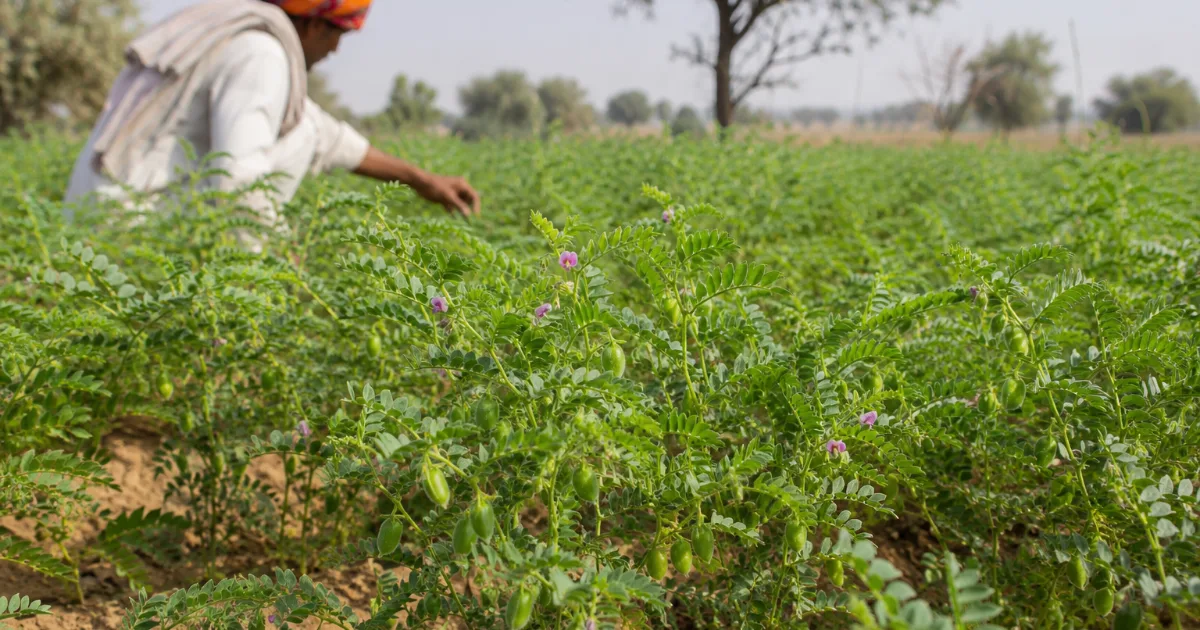
Gram (chana or chickpea) is the most important rabi pulse in Rajasthan. It grows well on conserved soil moisture, needs far less water than wheat, and as a legume it adds nitrogen to the soil for the next crop. For farmers with limited irrigation, gram is often the most reliable rabi crop.
Gram also fits well in a rotation with mustard, wheat or cumin, which helps break pest and disease cycles. With good seed, timely sowing and alert pest control, it can give stable returns with modest investment.
Sowing time and field preparation
In Rajasthan, gram is usually sown from mid-October to early November, depending on soil moisture and temperature. Rainfed gram should be sown while moisture is still available after the monsoon. Late sowing shortens the crop, raises the risk of frost and heat at pod filling, and usually lowers yield. Our rabi sowing planning guide helps you plan the whole season.
- Gram prefers well-drained light to medium soils; avoid waterlogged or saline patches.
- A rough, cloddy seedbed is fine; gram does not need a very fine tilth.
- Deep summer ploughing and removing old crop debris reduce soil-borne disease and pests.
Seed, variety and seed treatment
Choose a variety recommended for your district, including wilt-tolerant desi or kabuli types. Your KVK or agriculture office can tell you which certified seed is available.
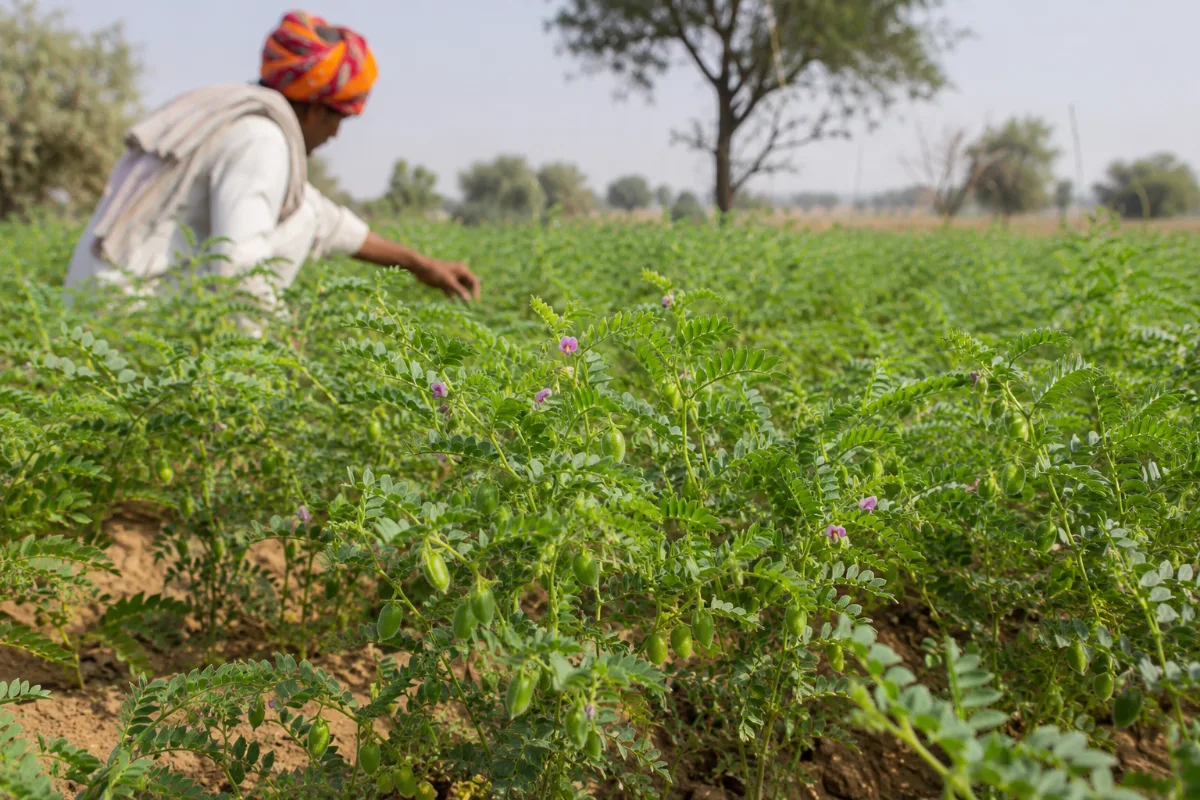
Seed treatment is essential in gram. First treat seed with a recommended fungicide or Trichoderma to protect against wilt and root rot, then with Rhizobium culture just before sowing to improve nitrogen fixation. Sow in lines at the depth and seed rate recommended for your zone, deeper in dry soils so the seed reaches moisture.
Nipping, weeds and nutrients
Nipping (pinching off the top tips of young plants) when the crop is about a month old encourages more branches and more pods. One or two weedings in the first six weeks keep the crop clean.
Gram needs little nitrogen because it fixes its own, but it responds to phosphorus and, in many Rajasthan soils, to sulphur. Apply fertiliser based on a soil test. If your soil is low in organic matter, add compost or farmyard manure at sowing.
Irrigation at the right stage
Where irrigation is available, one light watering at branching and, if needed, one at pod formation usually works well. Avoid heavy irrigation; excess water causes yellowing, encourages wilt and produces leafy plants with fewer pods. Do not irrigate during peak flowering unless the crop is badly stressed. Sprinklers give a lighter, more even watering than flooding.
Pests and diseases: wilt and pod borer
Wilt is the most common disease of gram in Rajasthan. Plants dry up in patches, often at flowering. Rotation, seed treatment and tolerant varieties are the best defence.
The pod borer (a green caterpillar) is the most damaging pest. It eats leaves, flowers and the grain inside pods.
- Install pheromone traps to track moth activity.
- Place T-shaped bird perches in the field so birds can feed on caterpillars.
- Inspect plants from flowering onwards and act early, when larvae are small.
- Use only the sprays and doses recommended by your agriculture officer or KVK.
Harvest, storage and selling
Harvest when most pods are dry and leaves turn brown. Dry the produce well before threshing, and dry the grain again before storage. Store gram in clean, dry bags or bins, protected from pulse beetles. Good storage lets you sell when prices are better instead of in the post-harvest rush; if you need commercial space, see this checklist on how to choose a warehouse in Jaipur.
Check whether your crop is insured before risks such as frost or hailstorms strike; our PMFBY rabi crop insurance guide explains the process. You can also list your produce and compare buyers on the ATTPL Agritech marketplace.
Need advice on varieties, pest control or selling your chana? Contact ATTPL (ऐट्प्ल) HOLDCO - GROUP and our farm advisory team will help.
Frequently asked questions
What is the best time to sow gram in Rajasthan?
Gram is generally sown from mid-October to early November in Rajasthan, while soil moisture is available. Follow the exact window advised for your zone by the agriculture department or KVK.
Why is nipping done in gram?
Nipping removes the growing tips of young plants. It encourages more side branches, which usually means more flowers and pods per plant.
How can I control pod borer in chana naturally?
Use pheromone traps to monitor moths, put up bird perches, and check plants regularly from flowering. If spraying is needed, use only what your agriculture officer or KVK recommends.
Sources and further reading
General information only. Follow the latest recommendations of your local agriculture department or KVK for varieties, doses and chemicals.