
Crop Guides
Taramira Farming in Rajasthan: A Low-Water Oilseed for Dry Rabi Fields
By ATTPL Agritech Editorial Team · · 2 min read
A practical guide to taramira (Eruca sativa) cultivation in Rajasthan — why it suits dry and sandy soils, sowing time, seed rate, nutrients, irrigation, pests, harvest and uses of the oil and cake.
Why taramira is worth considering
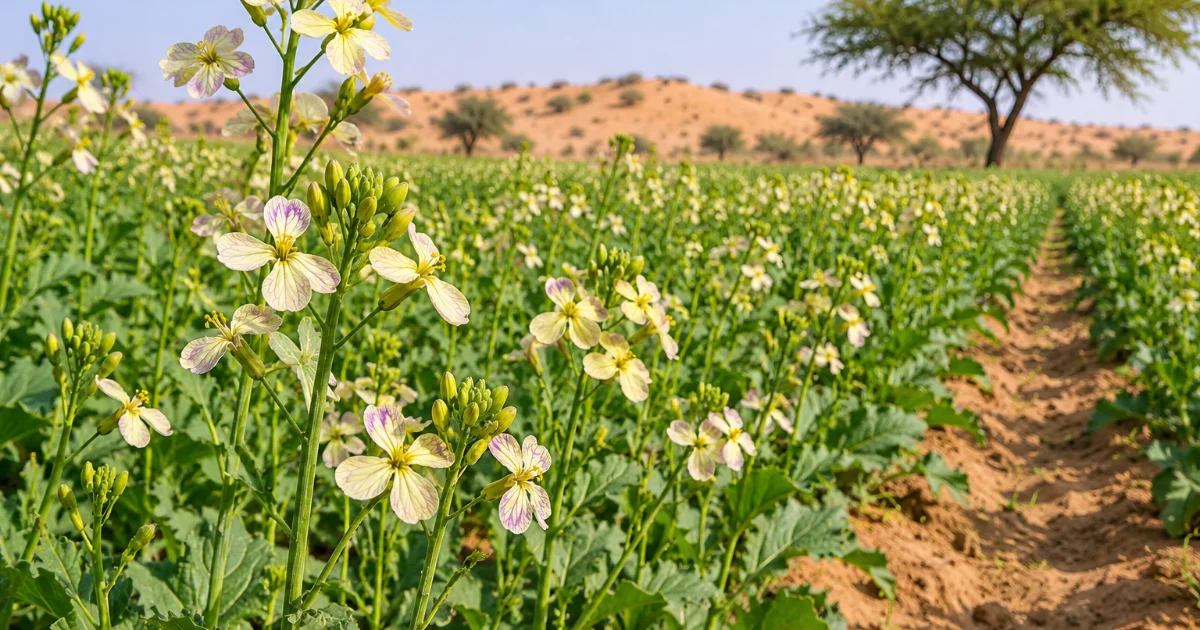
Taramira is a rabi oilseed that grows where many other crops struggle. On sandy, low-fertility soils with little or no irrigation, it can still give a useful harvest, which is why it remains important in the drier districts of Rajasthan.
Taramira (Eruca sativa) belongs to the mustard family but has a deeper root system and better tolerance to moisture stress. It is commonly grown on conserved soil moisture after the monsoon in districts with light soils. Its oil is used for industrial purposes, pickling and traditional uses, and the cake is used as manure. For many dryland farmers it is a low-risk crop when rainfall has been poor.
Sowing and seed
- Sow in October when soil moisture is still available after the monsoon
- Use a seed rate of around 5 kg per hectare, sown in lines about 30–45 cm apart
- Choose varieties recommended by the state agricultural university for your area
- Mix the small seed with sand or soil for even sowing
Moisture conservation from the previous season — such as field bunding and farm ponds — directly improves taramira yields.
Nutrients and irrigation
Taramira needs modest fertiliser. A soil test helps decide nitrogen, phosphorus and sulphur doses; sulphur supports oil content in oilseeds. Under rainfed conditions, apply fertiliser at sowing. Where one irrigation is possible, giving it at flowering or early pod filling usually gives the best response.
Pests and diseases
- Aphids can attack during cool, cloudy weather; monitor regularly and act on expert thresholds
- Painted bug and sawfly may damage young plants
- Use clean seed and crop rotation to reduce disease build-up
Many of the methods in our mustard farming guide also apply to taramira, as both are related crops.
Harvest, storage and selling
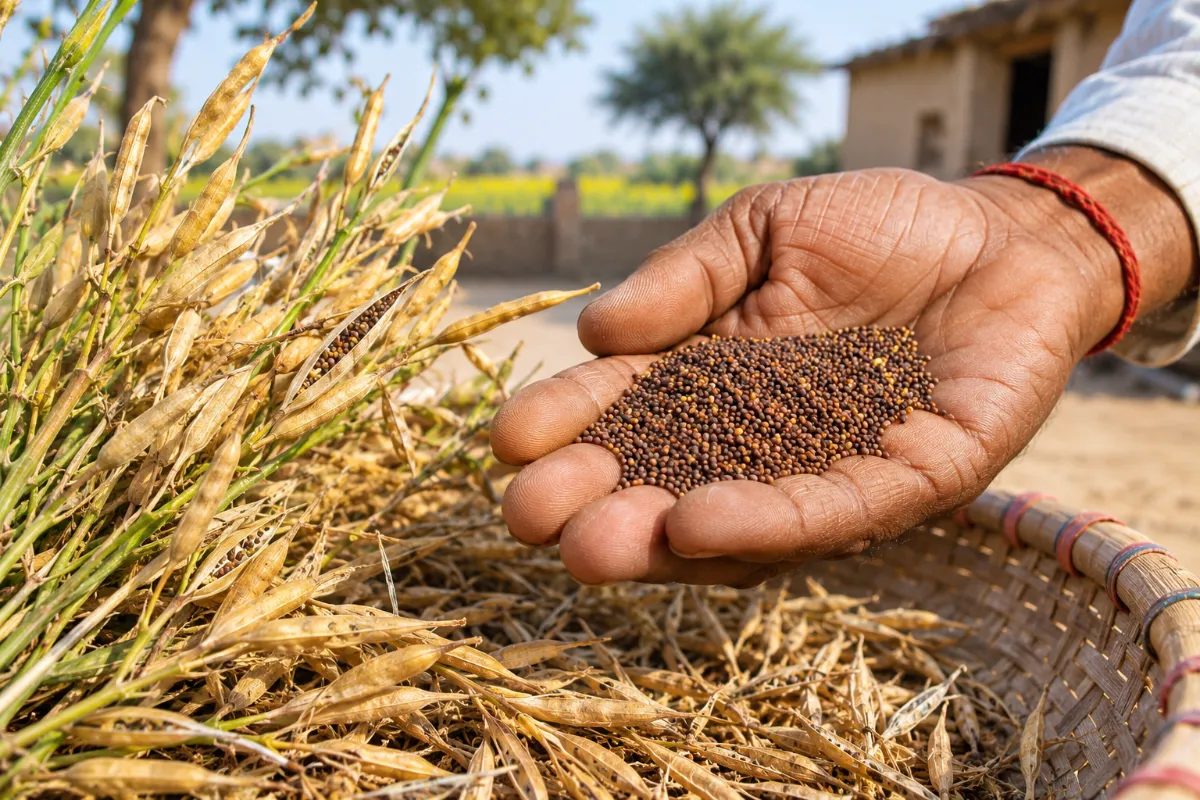
Harvest when most pods turn yellowish-brown, before they shatter. Dry the crop, thresh carefully and store clean seed in a dry place. Compare mandi prices and check whether your FPO can aggregate produce to reach oil mills directly, as explained in our article on FPO digital tools.
Support
ATTPL Agri helps farmers plan crops for dry conditions and connect to markets. For small oil-expeller or processing units, project planning support is available from ATTPL Consultancy.
Frequently asked questions
Can taramira be grown without irrigation?
Yes. It is commonly grown on conserved soil moisture in dry areas, though one irrigation at flowering can improve yield.
What is taramira oil used for?
It is used for industrial purposes, pickles and some traditional uses. The oil cake is often used as organic manure.
How is taramira different from mustard?
Both are in the same plant family, but taramira is more tolerant of drought and poor soils, while mustard generally gives higher yields with better inputs.
Sources and further reading
This article is general guidance for farmers. Varieties, doses and timings vary by zone and season; follow advice from your Krishi Vigyan Kendra or agriculture department.