
Water Management
Farm Ponds (Khet Talai): Rainwater Harvesting for Farmers
By ATTPL Agritech Editorial Team · · 3 min read
How farm ponds (khet talai) help Rajasthan farmers store rainwater for irrigation: site selection, size, lining, subsidy support, safety and maintenance.
Why farm ponds help
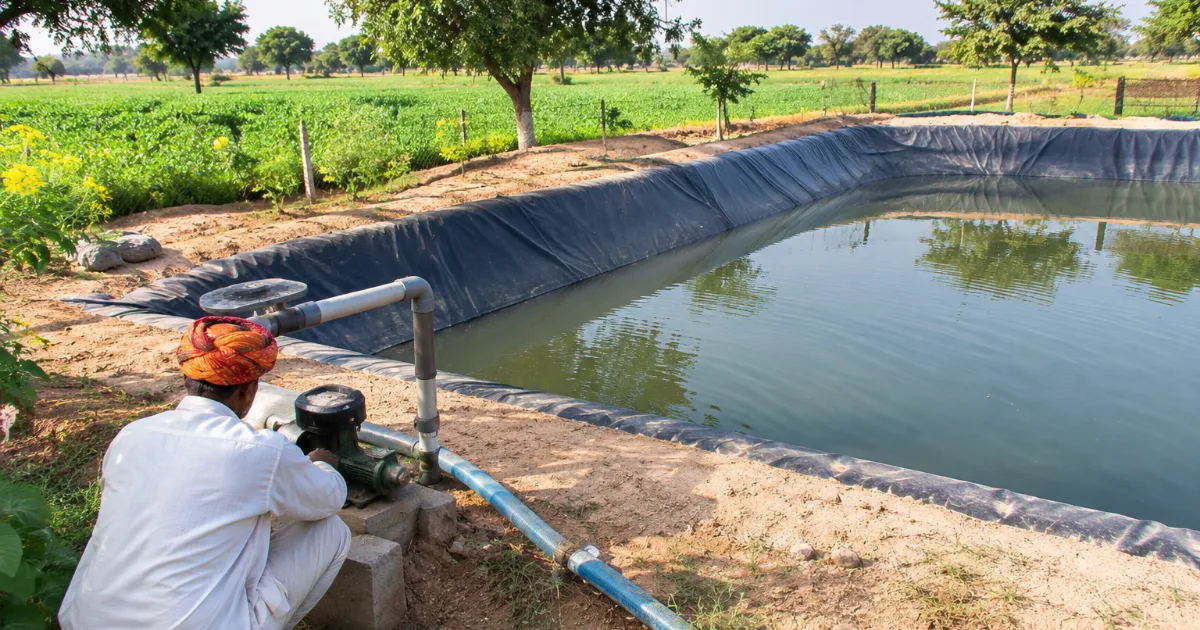
Rainfall in Rajasthan is short, uneven and often comes in a few heavy spells. Much of that water runs off the fields before crops can use it. A farm pond, or khet talai, captures this runoff and stores it for protective irrigation when the rains break or for the rabi season. Many farmers who have built ponds say it has made their farming far less dependent on uncertain rain.
- Store monsoon runoff for life-saving irrigation during dry spells.
- Allow a second crop or better rabi yields.
- Recharge groundwater around the pond.
- Support fish farming, livestock and kitchen gardens in some cases.
Ponds work best together with efficient irrigation such as drip and sprinklers; see our smart irrigation guide.
Choosing the site and size
Select the lowest part of the field where runoff naturally collects, but away from house foundations and roads. The soil, slope and catchment area decide how much water can be collected. Agriculture department staff can help decide the size based on your land and crops. A small inlet channel with a silt trap prevents mud from filling the pond quickly.
Lining and construction
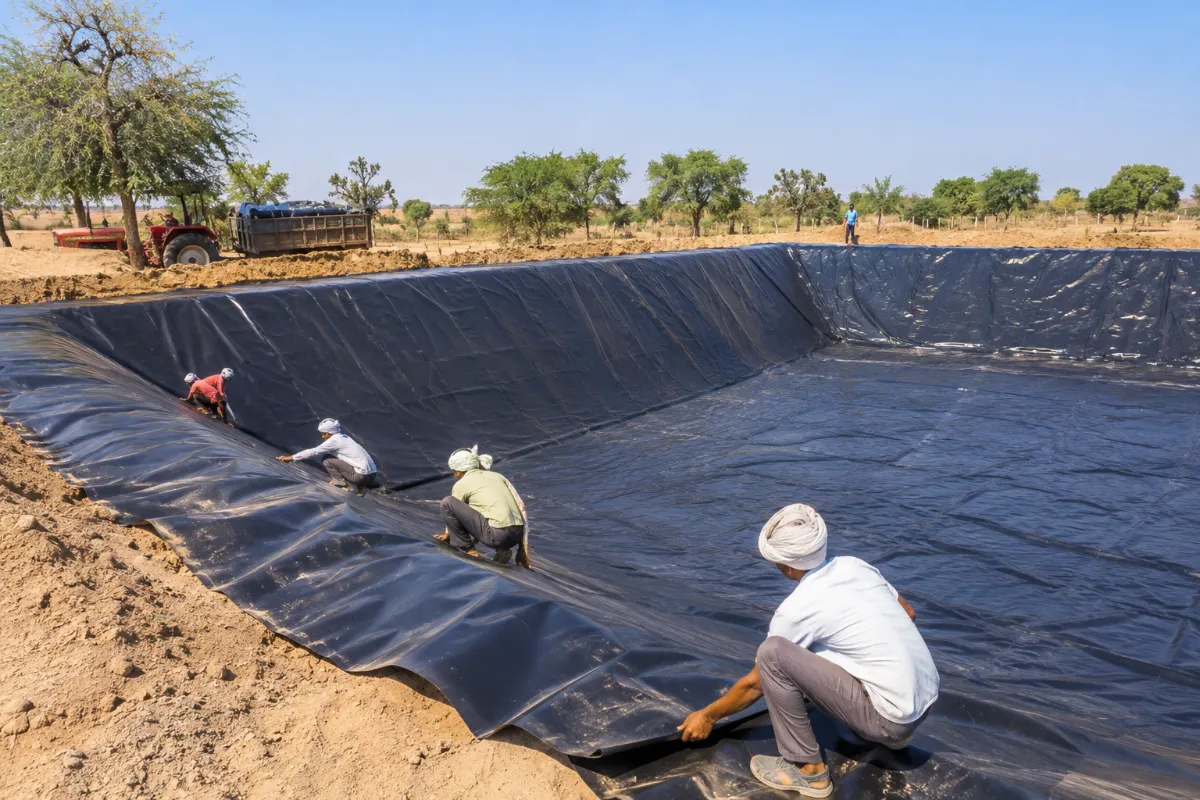
In sandy soils of western Rajasthan, unlined ponds lose much water through seepage. A plastic (geomembrane) lining reduces losses greatly. Slopes should be gentle and stable, with a raised bund around the pond and a spillway for excess water. Construction is best done well before the monsoon.
- Remove stones and roots before laying the lining.
- Anchor the lining in trenches at the top of the slopes.
- Protect the lining from sunlight damage with a soil cover where advised.
Government support
The Rajasthan government has supported farm ponds through schemes administered by the agriculture department, with subsidy for construction and lining for eligible farmers. Rules, subsidy amounts and application windows change, so check the current details on the Raj Kisan Saathi portal or with your local agriculture supervisor. Keep land records and bank details ready when applying. Low-cost finance for farm improvements can also come through a Kisan Credit Card.
Using the stored water well
Pump water from the pond with an efficient pump; solar pumps are popular because running costs are low. ATTPL Solar covers solar pumping options. Plan irrigation for the most critical crop stages rather than spreading water thinly. Covering part of the surface or planting windbreaks can reduce evaporation.
Planning crops around stored water
A farm pond is most valuable when the stored water is planned carefully. Estimate how much water the pond usually holds after the monsoon and how much evaporation and seepage will reduce it. Then decide which crops and which growth stages will get that water.
- Use stored water for life-saving irrigation during long dry spells in kharif.
- Give priority to high-value crops or vegetables in rabi.
- Combine with mulching to reduce water demand.
- Avoid flood irrigation from the pond; use drip or sprinklers.
Common problems and solutions
- Pond fills with silt quickly: build a silt trap and grassed waterway at the inlet.
- Water disappears soon after rains: add or repair the lining.
- Bunds erode: plant grass on slopes and maintain the spillway.
- Algae and mosquitoes: keep water moving where possible and avoid stagnant corners.
Small fixes done early keep the pond working well for many seasons and protect the investment made in digging and lining it.
Safety and maintenance
- Fence the pond and keep children and animals away.
- Remove silt every year before the monsoon.
- Repair lining tears quickly.
- Keep inlet channels and spillways clear.
A well-maintained pond can serve a farm for many years. For advice on water management and crop planning, contact ATTPL Agritech. Small civil works such as inlets and spillways can be planned with ATTPL Infra.
Frequently asked questions
What is a khet talai?
A farm pond dug in the field to collect and store rainwater runoff for irrigation and other farm uses.
Is lining necessary?
In sandy soils, a plastic lining greatly reduces seepage losses. In heavier soils, lining may be less critical.
Is there a subsidy for farm ponds in Rajasthan?
The state has supported farm ponds through agriculture department schemes. Check current rules and amounts on the Raj Kisan Saathi portal.
How much water can a farm pond store?
It depends on the size, depth and lining of the pond and on the catchment and rainfall; agriculture staff can help estimate capacity for your field.