
Crop Protection
Mustard Aphid (Mahu) Control in Rajasthan: An IPM Guide for Farmers
By ATTPL Agritech Editorial Team · · 2 min read
How to monitor and control mustard aphid (mahu) in Rajasthan: when it attacks, economic threshold, sticky traps, natural enemies, safe spraying and bee protection.
Why mahu matters
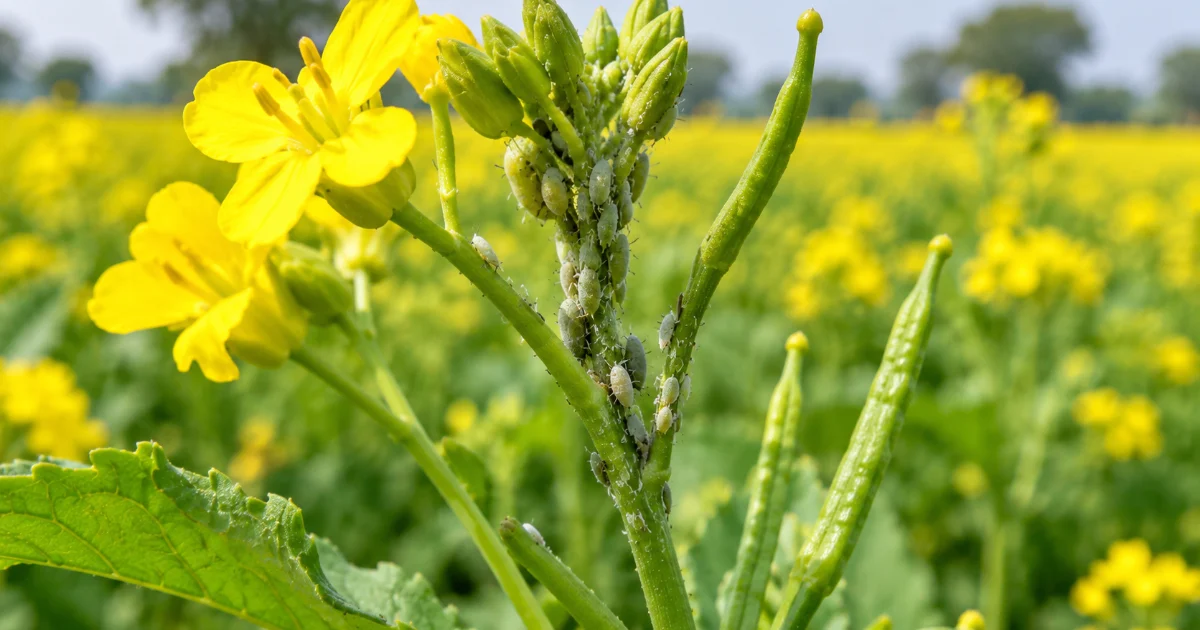
The mustard aphid, called mahu or chepa by many farmers, is the most damaging insect pest of rapeseed-mustard in north India. Colonies of small green-grey insects suck sap from tender shoots, flowers and pods. Heavy attack stunts plants, reduces pod setting and seed oil content, and the sticky honeydew favours sooty mould.
Rajasthan is the largest mustard-growing state, so timely management protects a major source of farm income. See our mustard farming guide for crop basics.
When attack peaks
Aphid numbers usually build up from late December to February, especially in cool, cloudy and humid weather. Late-sown crops often suffer more. Sowing at the recommended time, balanced use of nitrogen and avoiding very dense stands help the crop escape peak attack.
Monitor before you spray
- Walk the field twice a week from the start of flowering and check the central shoot of plants at several spots
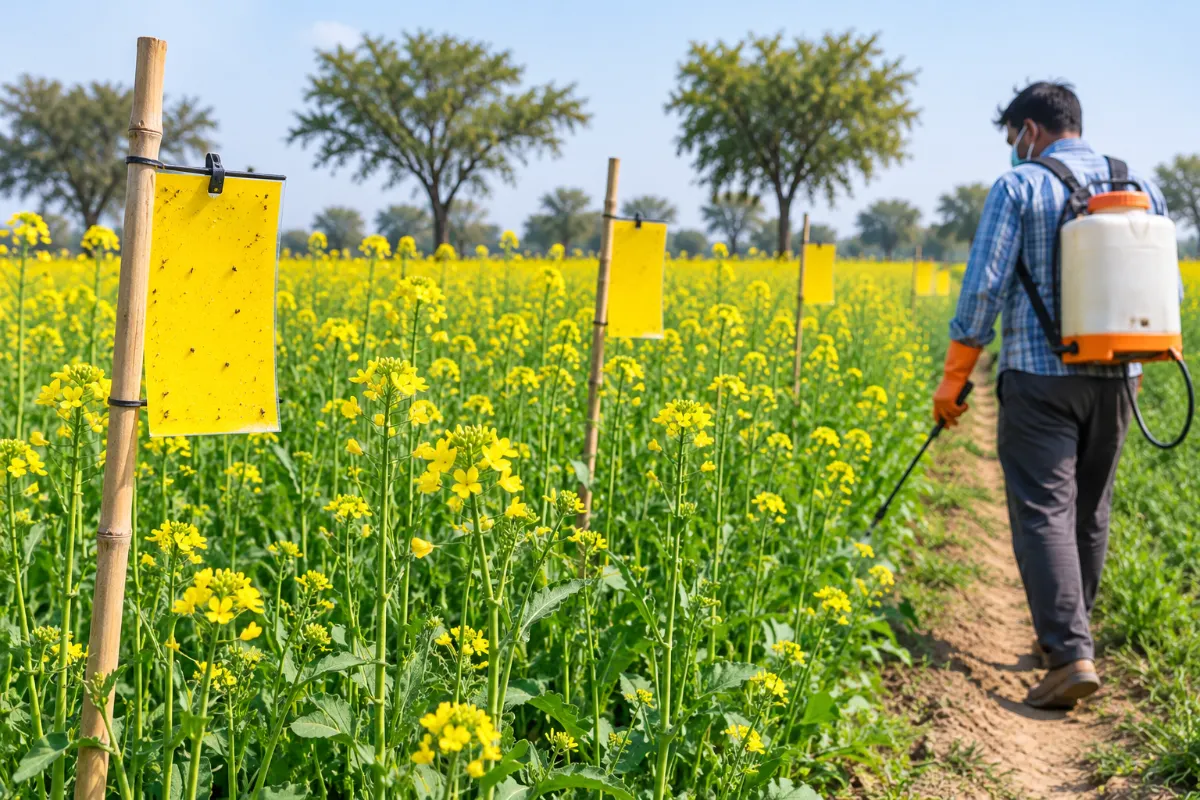
- Install yellow sticky traps at a few points to see when winged aphids arrive
- Use the economic threshold recommended by your state agricultural university; a commonly used guide is about 10 per cent of plants infested or roughly 26 to 28 aphids on the top 10 cm of the central shoot
- In early, patchy attack, cut and destroy the infested twigs
Spraying by calendar wastes money and kills the natural enemies that keep aphids down.
Natural enemies and safer options
Ladybird beetles, syrphid fly larvae and parasitic wasps feed on aphids. Protect them by avoiding unnecessary broad-spectrum sprays. Neem-based products and neem seed kernel extract can help at low pest levels. These steps are part of integrated pest management for rabi crops.
If chemical control is needed
Use only an insecticide that is registered for mustard aphid and recommended by your agriculture department, at the label dose and with clean water. Spray in the evening when bees are less active, wear gloves, mask and full-sleeve clothes, and respect the waiting period before harvest. Do not mix several chemicals on your own.
Mustard flowers are important for honey bees. If beekeepers keep boxes near your field, inform them before spraying; read our guide on beekeeping in mustard fields.
How ATTPL Agritech helps
ATTPL Agritech aims to bring pest alerts, weather information and advisory together for farmers in Rajasthan. For district-specific spray recommendations, contact your Krishi Vigyan Kendra or agriculture supervisor.
Frequently asked questions
What is mahu in mustard?
Mahu is the common name for the mustard aphid, a small sap-sucking insect that attacks shoots, flowers and pods.
When should I spray for mustard aphid?
Only when monitoring shows the pest has crossed the economic threshold recommended for your area, not by calendar.
How can I protect bees while controlling aphids?
Spray only when needed, in the evening, with a registered product, and inform nearby beekeepers in advance.
Sources and further reading
This article is general information for farmers and agri businesses, not agronomic, financial or legal advice. Prices, schemes and weather change; check official sources and your local agriculture officer before acting.