
Allied Income
Beekeeping with Mustard Crops in Rajasthan: Extra Income and Better Pollination
By ATTPL Agritech Editorial Team · · 2 min read
How Rajasthan farmers can add beekeeping to mustard and other rabi crops — benefits for pollination, getting started, colony care, honey harvesting, registration and support under the National Beekeeping and Honey Mission.
Why mustard and bees go together
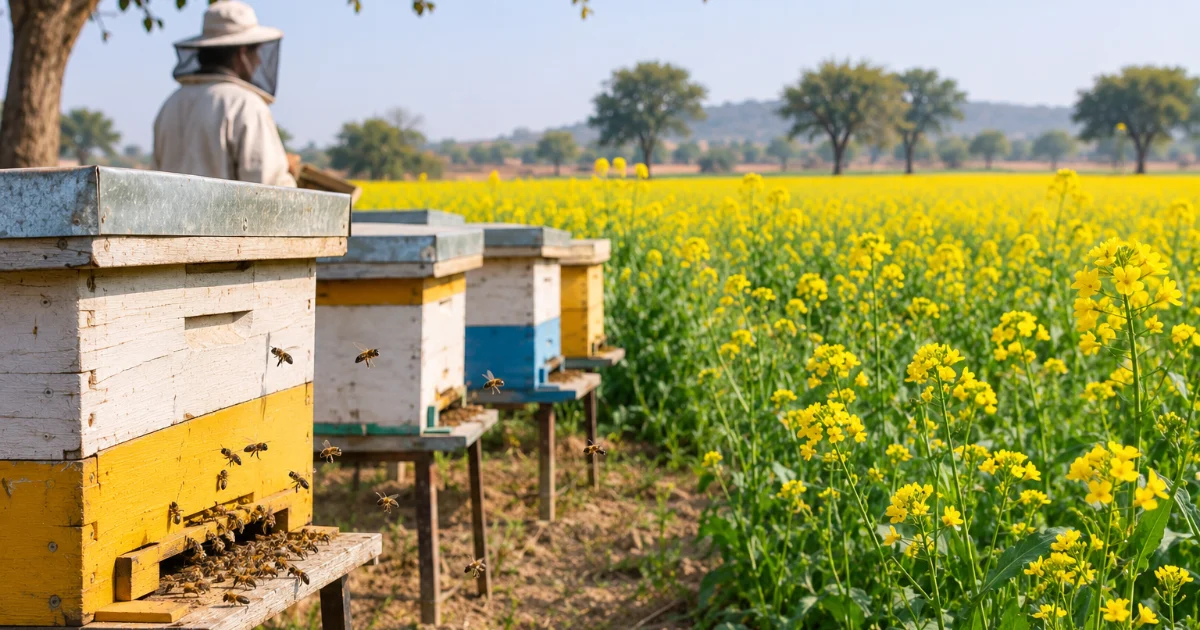
When mustard fields across Rajasthan turn yellow in winter, they are one of the best natural food sources for honey bees. Keeping bee boxes near these fields can give farmers honey income and can also improve pollination of the crop.
Mustard flowers produce plenty of nectar and pollen during the cool months, which helps bee colonies grow. Bees moving between flowers improve pollination, and studies in India have reported better seed setting in mustard and other cross-pollinated crops where bees are present. For farmers, beekeeping is an allied activity that needs little land and fits alongside existing crops — read our mustard farming guide for crop basics.
Getting started
- Take hands-on training from a Krishi Vigyan Kendra, agricultural university or recognised beekeeping trainer
- Start small, with a few colonies of Italian honey bees (Apis mellifera) in standard bee boxes
- Place boxes on stands in partial shade with access to clean water
- Keep boxes away from busy paths, livestock sheds and spray areas
Beekeepers can register on the national honey and beekeeping portal, which supports traceability of honey and access to schemes.
Protecting bees from pesticides
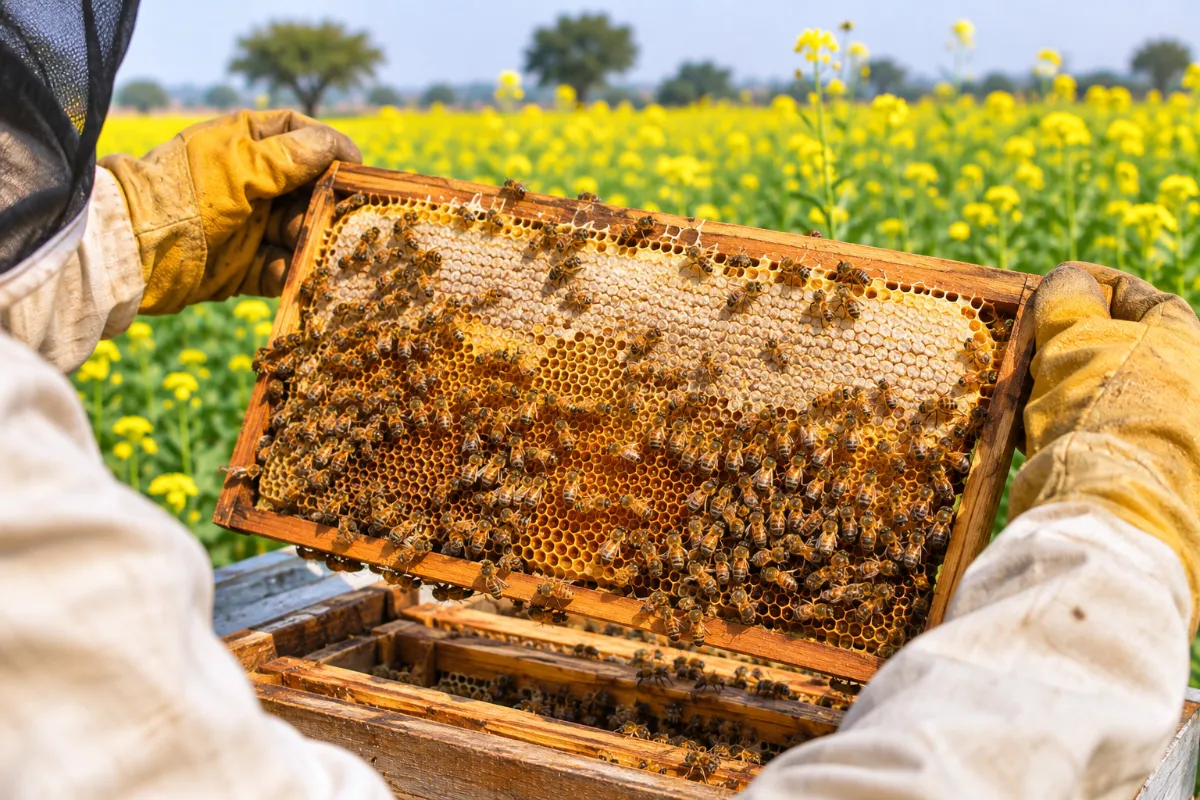
The biggest risk to bees in crop fields is pesticide spraying during flowering. Coordinate with neighbouring farmers, avoid spraying when bees are active, prefer evening sprays when spraying is unavoidable, and choose methods from integrated pest management. Many farmers find that healthier pollination offsets some of the need for chemical inputs.
Colony care and honey harvest
- Inspect colonies regularly for queen health, brood and disease
- Provide sugar syrup only in lean periods, never to mix into honey
- Harvest only capped honey frames using an extractor, and filter it cleanly
- Store honey in food-grade containers and test moisture before sale
After the mustard season, many beekeepers move colonies to other flowering crops or forests, so plan migration carefully.
Selling honey and support
Honey can be sold locally, to FPOs or to processors. Packed honey for retail needs food safety registration — see the FSSAI licence guide from ATTPL Consultancy. The National Beekeeping and Honey Mission supports training, equipment and infrastructure through implementing agencies; check current guidelines with your district horticulture or agriculture office.
How ATTPL Agri can help
ATTPL Agri supports farmers and FPOs with allied-income planning and market connections. Women's groups interested in honey enterprises can also read about women agripreneurs.
Frequently asked questions
Do bees improve mustard yield?
Studies in India report better pollination and seed setting in mustard where bees are present, though results vary with conditions.
How many bee boxes should a beginner start with?
Starting with a few colonies after proper training is sensible. Expand once you are confident with colony care and marketing.
Is a licence needed to sell honey?
Selling packed honey to consumers generally requires FSSAI registration or licence depending on scale. Check current rules.
Sources and further reading
This article is general guidance. Beekeeping needs proper training and safety precautions; follow advice from experts and official agencies.