
Weather and Risk
Frost (Pala) Protection for Rabi Crops
By ATTPL Agritech Editorial Team · · 3 min read
How Rajasthan farmers can protect mustard, gram, cumin and vegetables from frost (pala): warning signs, light irrigation, sprays, covers and recovery.
Why frost is a real rabi risk in Rajasthan
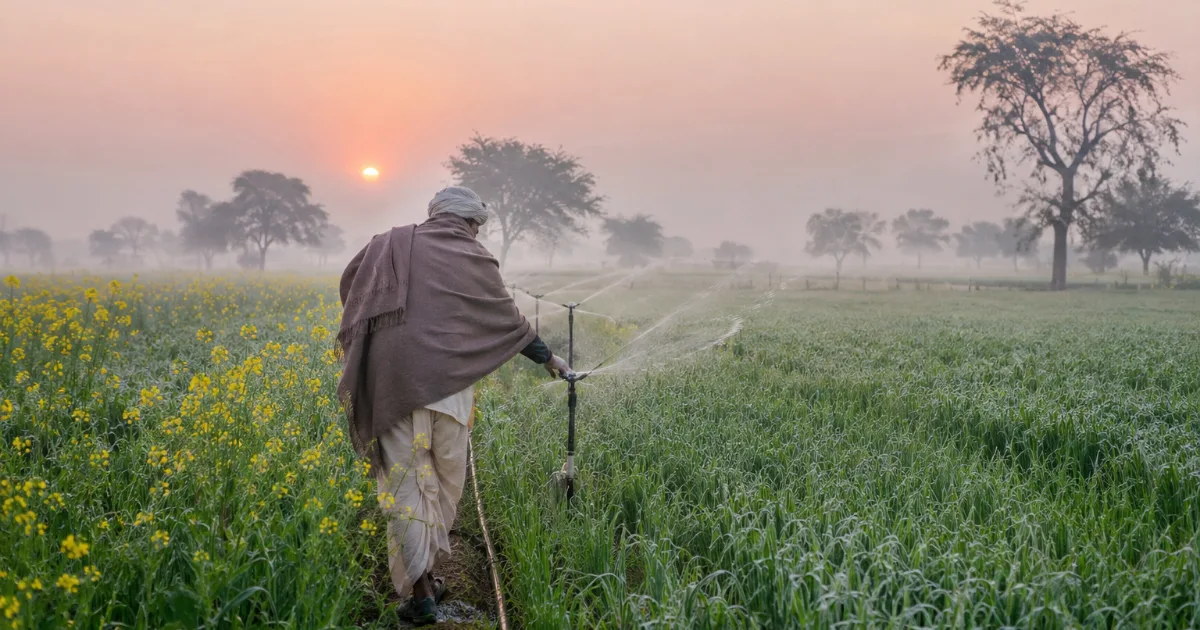
Every winter, cold waves bring frost (pala) to many parts of Rajasthan, mostly in December and January. On a clear, calm night the temperature near the ground can fall to freezing even when the forecast minimum looks a little higher. Ice forms inside plant cells, the cells burst, and leaves, flowers and young pods dry up within days.
Mustard, gram, cumin, potato, peas and most vegetables are very sensitive, especially at flowering and pod formation. Wheat is more tolerant but can also suffer at the earing stage. Planning in November, before the cold arrives, is the best way to limit losses.
Know the warning signs
Frost is most likely when several conditions come together:
- A cold wave warning from the India Meteorological Department (IMD) or your district agromet advisory.
- A clear sky and calm air in the evening, after a cold northerly wind during the day.
- Low-lying fields and areas with sandy soil, which lose heat quickly.
- Crops at flowering or pod-filling stage.
Check forecasts every evening during December and January. The IMD website and agromet advisories (also available through apps such as Meghdoot) give district-level weather updates in Hindi and English.
Light irrigation: the first line of defence
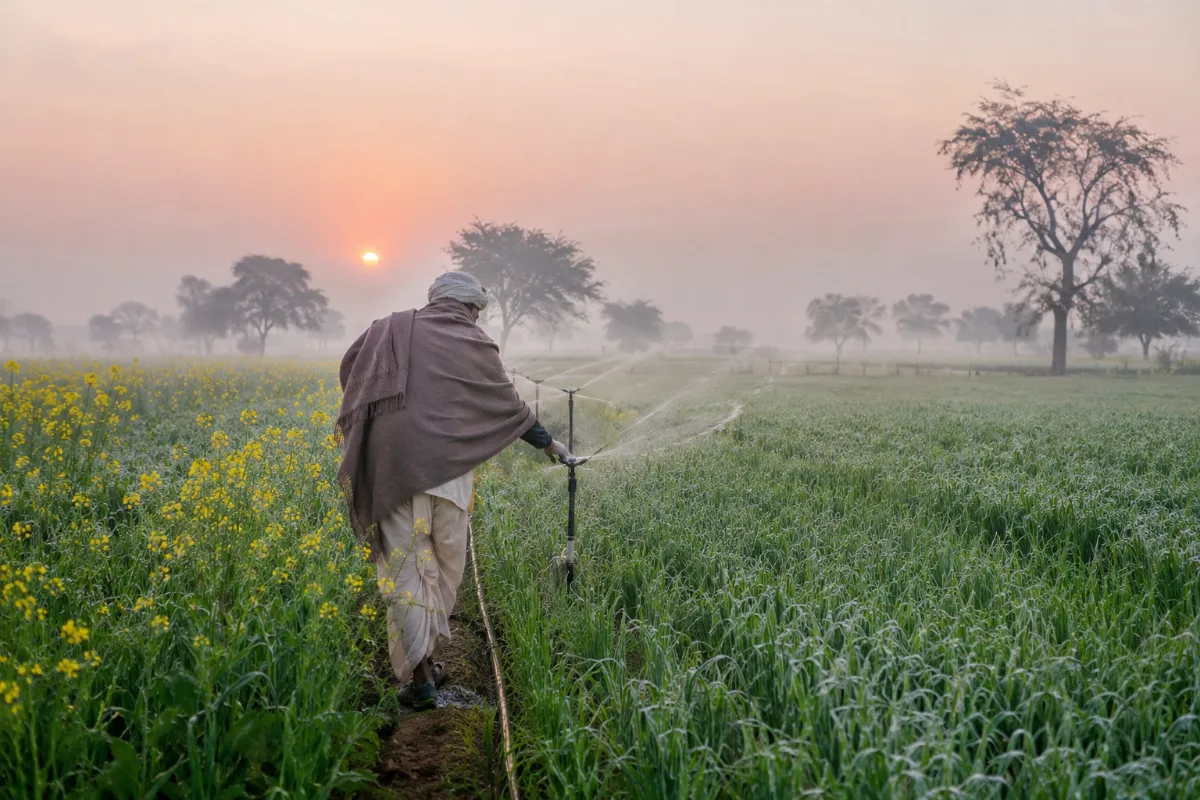
Moist soil holds and releases more heat than dry soil, so a light irrigation before an expected frost night keeps the field a little warmer. Sprinklers running lightly in the evening or early night are especially useful. Avoid heavy flooding, as waterlogging hurts crops like gram and cumin. Our guide to smart irrigation for Rajasthan explains how drip and sprinkler systems work.
Night-time irrigation needs reliable power. Many farmers now use solar water pumps under PM-KUSUM to reduce dependence on grid supply hours.
Sprays and nutrition
Agriculture department advisories in Rajasthan often recommend protective sprays before or during cold spells, such as a very dilute sulphuric acid solution or thiourea. These can help plants resist frost injury. Doses matter a lot, and a wrong mixture can burn the crop, so take the exact dose and timing from your agriculture supervisor or KVK.
A balanced crop is more resilient. Fields that received potash and sulphur based on a soil test, and that are free of severe pest attack, usually recover better after a cold spell.
Physical protection for small plots and nurseries
- Cover vegetable nurseries and small high-value plots with straw, thatch or plastic sheets at night, and remove them in the morning.
- Plant windbreak rows of trees or tall crops on the northern and western sides of the farm to cut the cold wind.
- Mulch with crop residue around vegetables to keep soil warmer; do not burn residue, which harms soil and air.
- Avoid hoeing or loosening the soil just before a cold night, as loose dry soil cools faster.
Plan ahead: sowing time and crop choice
Timely sowing helps the crop pass its most sensitive stage before or after the coldest weeks. Very late-sown mustard and gram often flower in peak cold, which raises frost risk. Read our mustard farming guide for sowing and variety tips. Spreading risk across crops and sowing dates also means one cold night does not affect the whole farm.
After a frost: assess and recover
Do not rush to uproot the crop. Wait a few days to see how much new growth appears. A light irrigation and a recommended nutrient spray can help plants recover. Record the damage with dated photos and inform your bank, insurance company or agriculture office early if you have crop insurance; our PMFBY guide explains how claims work.
Want weather-based advice for your crops this winter? Contact ATTPL (ऐट्प्ल) HOLDCO - GROUP and our farm advisory team will help you plan frost protection.
Frequently asked questions
Which crops are most affected by frost in Rajasthan?
Mustard, gram, cumin, potato, peas and vegetables are the most sensitive, especially at flowering and pod formation. Wheat is more tolerant but can be hurt at earing.
Does light irrigation really protect crops from frost?
Yes. Moist soil stores and releases more heat than dry soil, so a light irrigation before a frost night keeps the field slightly warmer. Avoid heavy flooding.
Is spraying sulphuric acid safe for crops?
Only a very dilute solution is used, and only at the dose your agriculture department or KVK recommends. A wrong dose can burn the crop, so never guess the mixture.
Sources and further reading
General information only. Follow the latest recommendations of your local agriculture department or KVK for varieties, doses and chemicals.