
Crop Planning
Chickpea (Gram) Farming in Rajasthan: A Practical Rabi Guide from Sowing to Mandi
By ATTPL Agritech Editorial Team · · 2 min read
A practical guide to growing chickpea (chana) in Rajasthan's rabi season — field choice, sowing time, seed treatment, irrigation, pod borer and wilt management, harvest and selling.
Why chickpea suits Rajasthan
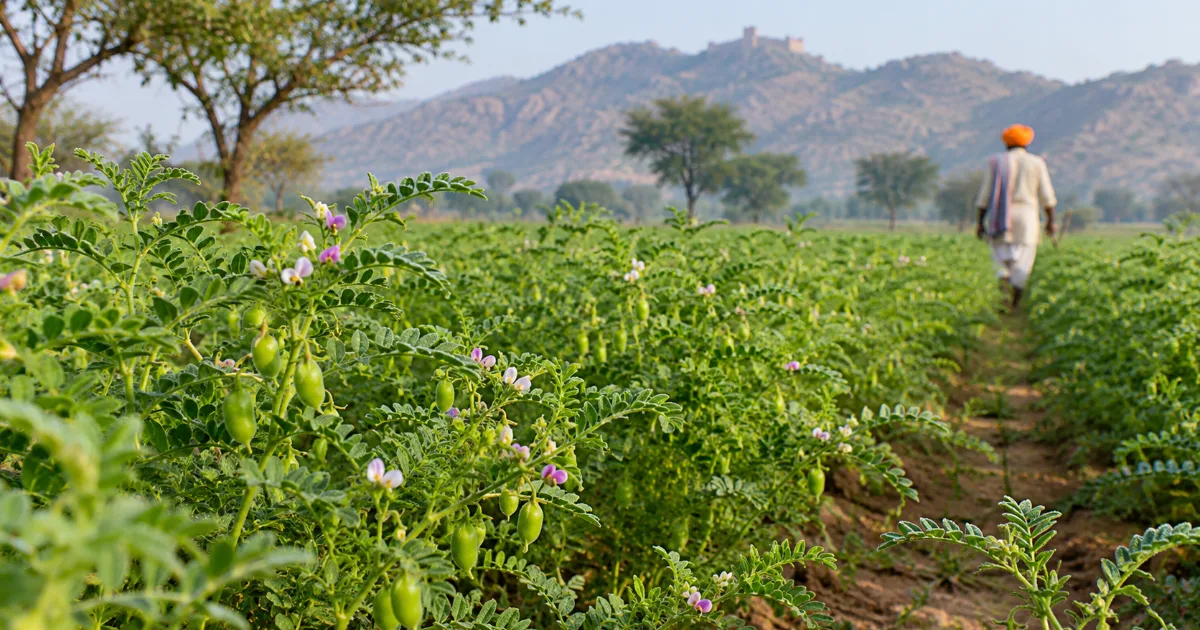
Chickpea (gram or chana) is one of the most important rabi pulses in Rajasthan. It needs little water, fixes nitrogen in the soil through its root nodules, and fits well after kharif crops such as bajra, guar or moong. For farmers with limited irrigation, a well-managed gram crop can give steady income and improve the soil for the next season.
Success depends on a few basics done on time: the right field, timely sowing, treated seed, light irrigation at the right stages and alert pest management.
Field selection and sowing
Chickpea prefers well-drained loam to sandy loam soil. Avoid water-logging and very saline patches.
- Sowing time: in most of Rajasthan, sow from mid-October to early November; rainfed fields with stored moisture are usually sown earlier, irrigated fields a little later
- Seed rate: roughly 60–80 kg per hectare depending on seed size; bold-seeded types need more
- Spacing: about 30 cm between rows, with seed placed at good moisture depth
- Variety: choose varieties recommended for your zone by the state agricultural university or your Krishi Vigyan Kendra (KVK), preferring wilt-tolerant ones
Get your soil tested before sowing so that phosphorus, sulphur and micronutrients are applied as per need. See our soil testing and soil health card guide.
Seed treatment and nutrition
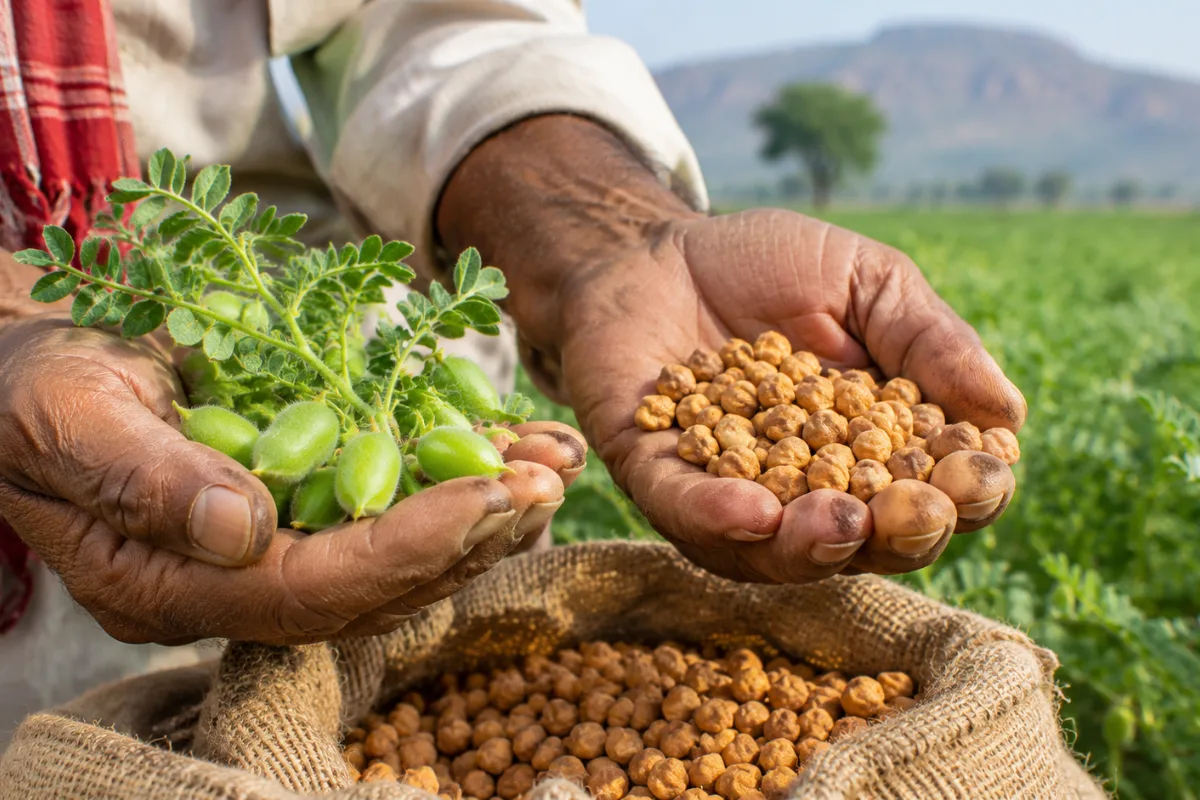
Treat seed first with a recommended fungicide and then with Rhizobium and PSB (phosphate solubilising bacteria) culture just before sowing. This protects young plants from soil-borne diseases and improves nodulation. Pulses need less nitrogen; a small starter dose with adequate phosphorus is usually enough, as advised by your soil test.
Nipping the growing tips around 30–40 days after sowing in good-growth fields can encourage more branches and pods.
Irrigation: less is more
Chickpea is sensitive to excess water. Where irrigation is available, one or two light irrigations are usually enough — commonly at branching and at pod formation. Avoid heavy irrigation during flowering and do not let water stand in the field. Sprinkler irrigation can save water on sandy soils; our guide to smart irrigation for Rajasthan explains the options.
Pod borer, wilt and other risks
Gram pod borer is the biggest pest. Monitor from flowering with pheromone traps and place bird perches in the field. Use biological options and need-based sprays only when the pest crosses the threshold advised by your KVK, following label doses. Fusarium wilt is managed by resistant varieties, seed treatment, crop rotation and avoiding very early sowing in hot soils.
Frost in December–January can damage flowers and pods; a light irrigation before a forecast cold night helps. Protect your income with crop insurance — read our PMFBY rabi crop insurance guide.
Harvest, storage and selling
Harvest when most pods turn yellow-brown and leaves dry, usually from late February to March. Dry the grain well before storage to prevent bruchid (dhora) damage, and store in clean, dry bags or bins.
Compare prices across mandis and online platforms, and check the minimum support price announced for the current rabi marketing season before you sell. Working capital for inputs can come from a Kisan Credit Card. For advisory and market linkage support, visit ATTPL Agri.
Frequently asked questions
When should chickpea be sown in Rajasthan?
Mostly from mid-October to early November. Rainfed fields are usually sown earlier when soil moisture is available.
How many irrigations does gram need?
Usually one or two light irrigations, at branching and pod formation. Avoid excess water and water-logging.
How can farmers control pod borer in chickpea?
Monitor with pheromone traps, use bird perches and biological options, and spray only when the pest crosses the threshold advised by the KVK.