
Livestock
Goat Farming in Rajasthan: Guide for Small Farmers
By ATTPL Agritech Editorial Team · · 4 min read
A practical goat farming guide for small farmers in Rajasthan: breeds, housing, feeding, health care, record keeping, finance and selling goats.
Why Goat Farming Works for Small Farmers in Rajasthan
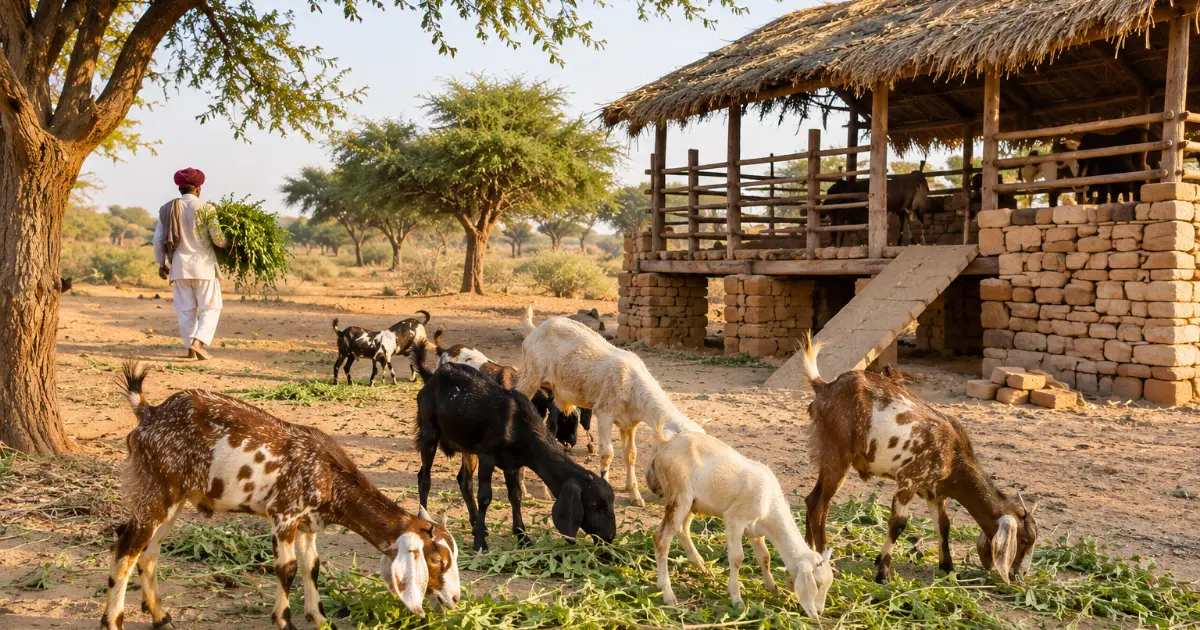
Goat farming has long been part of rural life in Rajasthan. Goats are hardy, eat a wide range of shrubs and fodder, and can be sold when cash is needed, which is why many families treat them as a living savings account. For small and marginal farmers, a well-managed goat unit can add steady income alongside crops. This guide explains how to start goat farming in Rajasthan sensibly: choosing breeds, building a simple shed, feeding, health care, keeping records, arranging finance and selling at a fair price.
Goats need less space and lower investment than large animals. They can browse on khejri, ber and other shrubs and use crop residues. Kids grow quickly, so a small herd can expand within a few years if managed well.
Goat farming is also a common enterprise for women in rural households. ATTPL's women agripreneur programme shares ideas on how women can build small farm businesses, including livestock.
Choosing Goat Breeds Suited to Rajasthan
Local breeds are adapted to heat, dry fodder and long walks. Breeds often reared in Rajasthan include Marwari, Sirohi, Jamunapari crosses and Barbari, each with different strengths for meat or milk.
- Buy healthy animals from known farmers or government farms rather than unknown traders.
- Check eyes, coat, hooves and body condition, and ask about past illness.
- Start small, for example with a few does and one good buck, and grow as you learn.
- Ask your veterinary officer or Krishi Vigyan Kendra which breed suits your area and purpose.
Simple Goat Shed Design and Hygiene
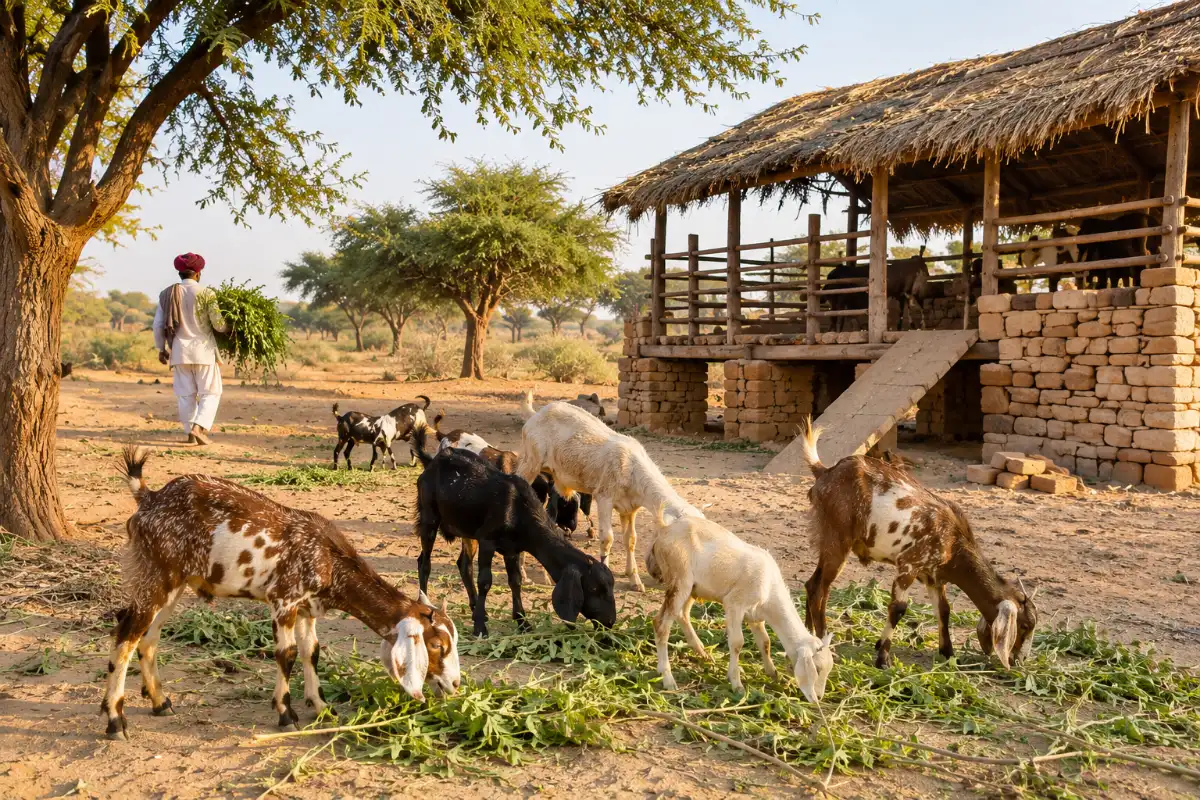
Goats dislike damp floors. A raised, dry and airy shed reduces disease. Local materials can keep cost low.
- Choose a slightly raised site where rainwater drains away.
- Give shade and cross-ventilation, with protection from cold winter winds.
- Keep separate space for kids, pregnant does and sick animals.
- Clean dung daily and keep clean drinking water available at all times.
Feeding Goats Through the Year
Good feeding is the base of a profitable goat unit. Combine grazing or browsing with green fodder, dry fodder and a small concentrate ration as advised by your vet. Pregnant and milking does and growing kids need extra care.
In dry months, fodder shortage is the biggest challenge. Growing fodder crops on a small plot, storing dry fodder and using water efficiently helps. If you also grow fodder, smart irrigation for small farms can stretch limited water further.
Goat Health Care and Vaccination
Most losses in goat farming come from disease and poor kid survival. Prevention is cheaper than treatment.
- Follow the vaccination schedule given by your local veterinary hospital.
- Deworm animals as advised by the vet; do not guess medicines or doses.
- Isolate new or sick animals for some days before mixing them with the herd.
- Ensure kids receive colostrum soon after birth and keep them warm in winter.
Many farmers also insure their animals. Reading about livestock and general insurance options and asking about government livestock insurance schemes at the veterinary office can protect you against sudden loss.
Records, Finance and Government Support
Keep a simple notebook or mobile record for each animal: birth date, weight, vaccination, breeding and sale. Records help you see which animals are profitable and are useful when you apply for a loan.
For a larger unit, banks usually ask for a clear plan. This guide on preparing a project report for a bank loan explains what lenders look for. ATTPL's agri fintech services can also help you understand credit options. For schemes under animal husbandry, subsidy consulting support can explain the paperwork; always confirm current eligibility and amounts on the official portal.
Selling Goats at a Fair Price
Demand for goats usually rises around festivals, so plan breeding so that animals are ready for sale at the right time. Weigh animals where possible and compare offers from local traders, weekly haats and nearby towns. Selling as a group through an FPO or self-help group can improve bargaining power and reduce transport cost.
Healthy, well-fed animals with clean coats usually attract better offers. Avoid selling in a hurry during fodder shortage if you can plan ahead, and keep vaccination records ready, as some buyers ask for them.
Planning a new goat unit or expanding your herd? Contact ATTPL Agritech to discuss breeds, feeding plans, finance and market links for your village.
Key takeaway: Goat farming can give small farmers in Rajasthan steady extra income when they start small, choose local breeds, keep sheds dry, follow the vet's health advice and keep basic records.
Frequently asked questions
Which goat breed is good for Rajasthan?
Local breeds such as Marwari and Sirohi are widely reared because they handle heat and dry fodder. Your veterinary officer or KVK can suggest the right breed for meat or milk in your area.
How many goats should a beginner start with?
Many beginners start with a small group of healthy does and one buck. This keeps risk low while you learn feeding, health care and selling.
Can I get a loan for goat farming?
Banks and government schemes do support livestock units. Prepare a simple project report and records, and check current scheme rules on the official portal or at your bank branch.