
Allied Activities
Dairy Farming as Extra Income for Rajasthan Farmers
By ATTPL Agritech Editorial Team · · 3 min read
How small farmers in Rajasthan can start dairy for steady income: choosing animals, feed and fodder, housing, health care, milk marketing and finance.
Why dairy fits well with farming
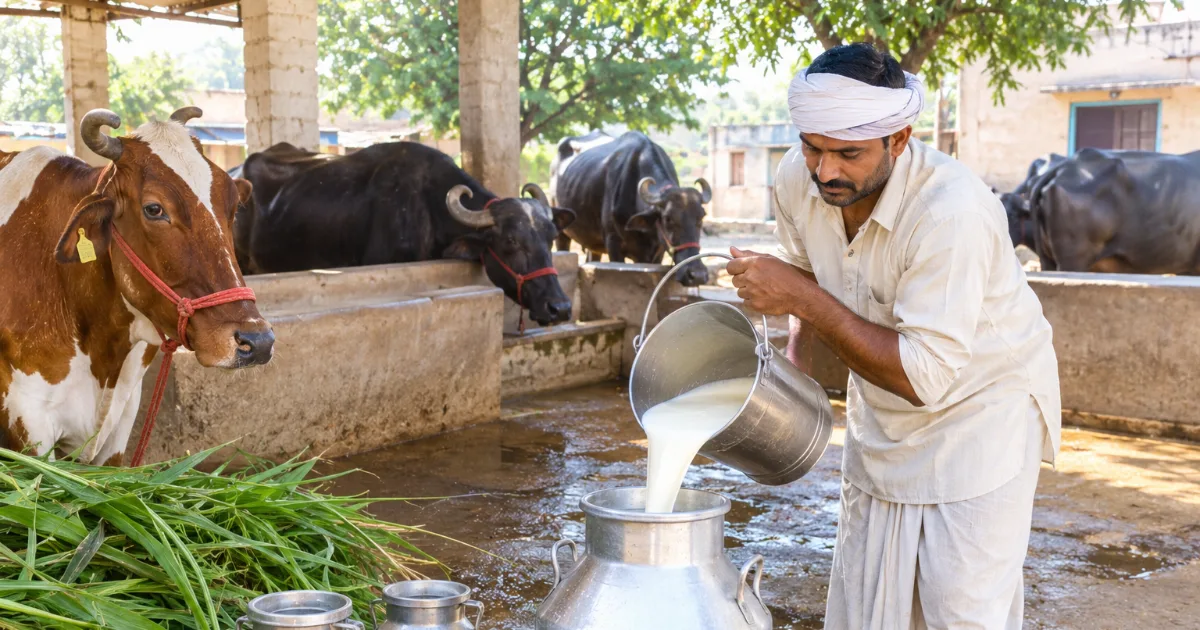
Crop income comes once or twice a year and depends on rain, prices and pests. Milk brings cash every day. That is why many families in Rajasthan keep a few cows or buffaloes alongside their fields. Crop residues become fodder, dung becomes manure or biogas, and women in the household often manage the dairy as a business of their own.
Done well, a small dairy unit can steady household income. Done carelessly, it can lose money through poor feeding, disease and low milk prices. Planning makes the difference.
Choosing the right animals
- Start small — two to five good animals — and grow as you learn.
- Choose breeds suited to your climate and fodder supply. Indigenous breeds such as Gir, Tharparkar and Rathi are adapted to Rajasthan's heat; crossbreds and Murrah buffaloes can give more milk with better feeding.
- Buy from known sources, check health records and vaccination, and watch the animal being milked before buying.
- Prefer animals in early lactation and of good age.
Feed and fodder: the biggest cost
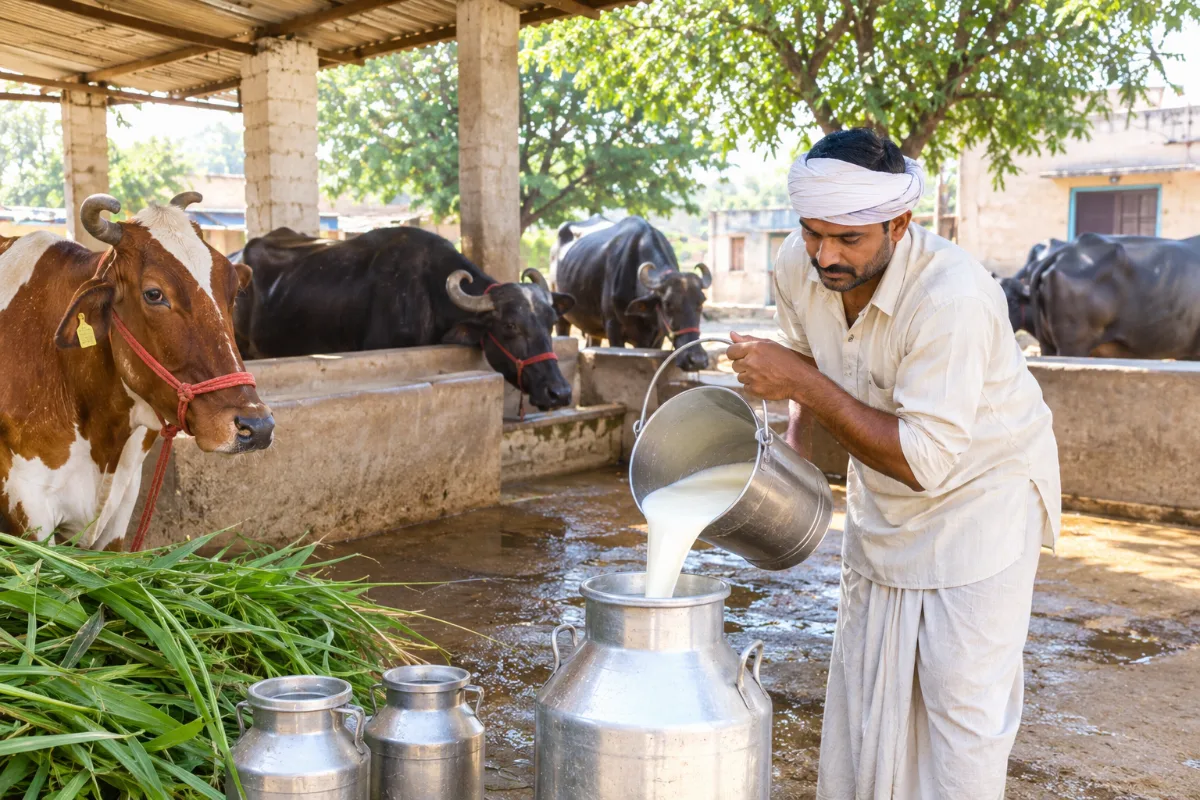
Feed often makes up the largest share of dairy costs. Grow green fodder on part of your land, such as berseem or oats in winter and suitable fodder crops in summer where water allows. Store dry fodder for lean months. Give balanced concentrate and mineral mixture according to milk yield, and ensure clean drinking water at all times, especially in summer.
Silage — fodder preserved in pits or bags — helps maintain green feed through dry periods.
Housing and hygiene
- A shed with shade, ventilation and a dry, non-slippery floor protects animals from heat and cold.
- Clean the shed daily and manage dung properly — compost or a biogas plant turns waste into value.
- Wash hands and udders before milking and use clean steel utensils to keep milk quality high.
Breeding and record keeping
Milk income depends on each animal calving regularly. Plan breeding so that animals calve at intervals advised by veterinarians, and use artificial insemination with quality semen through government or cooperative services where available. Heat detection — noticing when an animal is ready for breeding — is a skill that pays off; missed heats mean months of lost milk.
Simple records make a big difference. Note each animal's calving date, breeding date, daily or weekly milk yield, vaccinations and treatments. A notebook or a mobile app is enough. Records help you decide which animals to keep, which to sell and how much feed each needs, and they are useful when applying for loans or insurance.
- Mark due dates for vaccination and deworming on a calendar.
- Separate low-yielding, unproductive animals early to save feed.
- Raise female calves well; they are the future of your herd.
Health care
Follow the vaccination schedule advised by the local veterinary hospital for diseases such as foot-and-mouth disease, and deworm regularly. Watch for early signs of mastitis, fever or reduced appetite and call a veterinarian promptly. Insure your animals where schemes are available; it protects against heavy losses.
Selling milk and adding value
Joining a village dairy cooperative gives a regular buyer and fat-based pricing. Some farmers sell directly to households or sweet shops, or make ghee and paneer for better margins, but this needs hygiene and food safety registration. Keep simple records of milk, feed and costs to know your real profit.
Producer groups can sell together and buy feed in bulk; our article on FPO digital tools explains how farmer groups grow. Women interested in dairy as an enterprise can read about schemes for women agripreneurs.
Finance and support
Kisan Credit Card facilities and dairy-related schemes can support working capital and animal purchase; see our KCC guide. For loan options, ATTPL Finance can explain the process. For guidance on starting a dairy unit, contact us.
Frequently asked questions
How many animals should a beginner start with?
Many advisers suggest starting with two to five good animals and expanding after you gain experience and secure fodder.
Which breeds suit Rajasthan's climate?
Indigenous breeds such as Gir, Tharparkar and Rathi are well adapted to heat; buffaloes like Murrah are also common. Choose based on your fodder and market.
Is dairy profitable for small farmers?
It can provide steady income when feed costs are controlled, animals stay healthy and milk is sold through a reliable channel.
Sources and further reading
General information only. Consult your local veterinary and animal husbandry officers for breed, feed and health advice.