
Soil Health
Vermicompost Making on the Farm: A Step-by-Step Guide
By ATTPL Agritech Editorial Team · · 3 min read
How farmers can make vermicompost on the farm: earthworm species, bed preparation, raw materials, moisture, harvesting, storage, use and selling surplus.
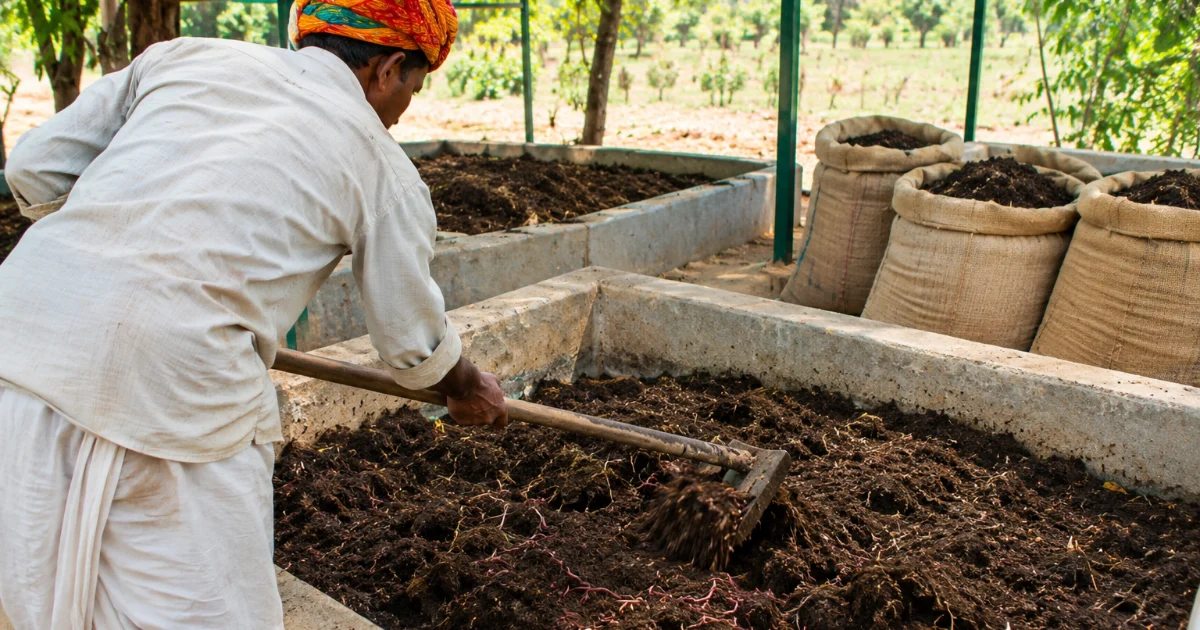
What you need
Healthy soil is the foundation of good yields. Vermicompost — compost made with the help of earthworms — turns farm waste such as crop residues, dung and kitchen waste into a rich, crumbly manure that improves soil structure, water-holding capacity and biological activity. It is simple to make, needs little investment and can even become a side income.
- A shaded place protected from direct sun and heavy rain.
- Beds of brick, concrete or ready-made vermi-bed sheets.
- Partly decomposed cow dung and crop residues.
- Composting earthworms, commonly Eisenia fetida (red wigglers).
- Water for keeping the beds moist.
Preparing the beds
Place a base layer of coarse material such as dry leaves or straw for drainage, then add partly decomposed dung mixed with chopped crop residues. Fresh dung can heat up and harm worms, so let it cool and partly decompose first. Release the earthworms on top and cover the bed with gunny bags or straw to keep it dark and moist.
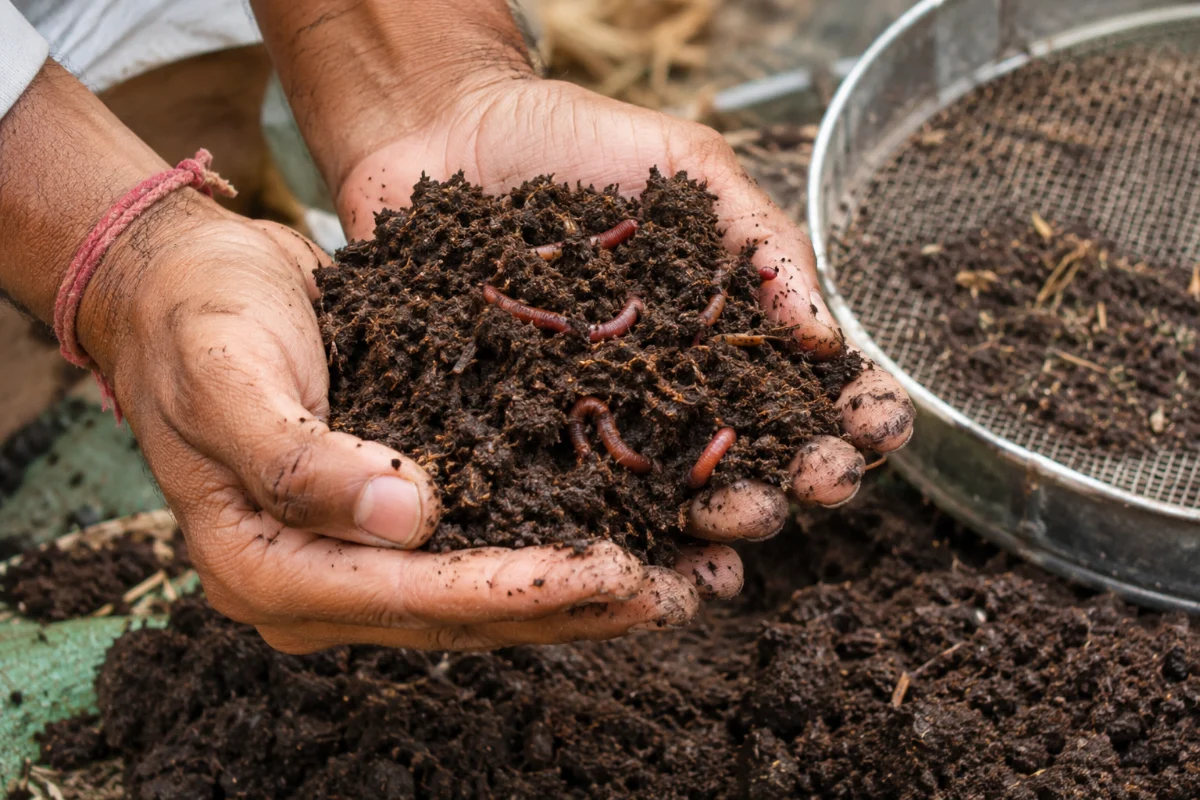
Daily care
- Keep the material moist like a squeezed sponge — not dripping.
- Protect beds from ants, rats and birds.
- Avoid oily, salty or chemical-treated materials.
- Turn the top layer gently if it becomes compact.
In hot Rajasthan summers, extra shade and more frequent watering are needed to keep worms alive.
Harvesting the compost
Vermicompost is usually ready in about two to three months, depending on materials and weather. It looks dark, crumbly and smells earthy. Stop watering a few days before harvest so worms move down, then remove the top compost. Sieve it to separate worms and undecomposed material, which can go back into a new bed.
Using vermicompost
Mix vermicompost into the soil at sowing or apply around plants in vegetable, fruit and field crops. It works best together with a soil test and balanced nutrition; see our soil health card guide. Over time, regular organic matter improves water retention — valuable in dry regions.
Common problems and fixes
- Worms dying or leaving the bed: material is too hot, too dry or too wet; adjust moisture and use partly decomposed dung.
- Bad smell: too much wet material or poor aeration; add dry leaves and turn the top layer gently.
- Ants in the bed: the bed is too dry; increase moisture and keep the base clean.
- Slow composting: material pieces are too large; chop crop residues smaller.
Checking beds daily for a few minutes prevents most of these problems.
Scaling up from one bed
Start with one or two beds to learn the process, then add more as you gain confidence. Earthworms multiply quickly, so a small starting stock can supply new beds over time. Keep a simple record of materials used, harvest dates and compost quantity for each bed. Farmers who produce more than they need can share worms with neighbours or form a small group to buy materials and sell compost together. Using vermicompost on your own fields first also shows its value to other farmers who may later become buyers.
Regular use of organic manure, together with efficient irrigation such as drip and sprinkler systems, helps sandy soils hold water and nutrients better.
Selling surplus and getting support
Many farmers and self-help groups sell packed vermicompost to nurseries, kitchen gardeners and other farmers. Clean packing, consistent quality and honest labelling build repeat buyers. Group production through farmer producer organisations reduces costs. Agriculture departments and KVKs sometimes support vermicompost units; check current schemes locally. Small business registration and planning help is available from ATTPL Consultancy, and working capital from ATTPL Finance. For farm advice, contact ATTPL Agritech.
Frequently asked questions
Which earthworm is used for vermicompost?
Composting species such as Eisenia fetida (red wigglers) are commonly used because they feed on organic waste near the surface.
How long does vermicompost take?
Usually about two to three months, depending on the materials, moisture and temperature.
Can fresh cow dung be used directly?
Fresh dung can heat up and harm worms, so it should be allowed to cool and partly decompose first.
Can kitchen waste be used for vermicompost?
Yes, vegetable and fruit peels can be added, but avoid oily, salty, meat or dairy waste and chemical-treated materials.