Organic Farming
Organic Certification in India: PGS vs NPOP Explained
By ATTPL Agritech Editorial Team · · 3 min read
How Indian farmers and FPOs can get organic certification: PGS-India vs NPOP, conversion period, costs to plan for, records needed and selling as organic.
Why certification matters
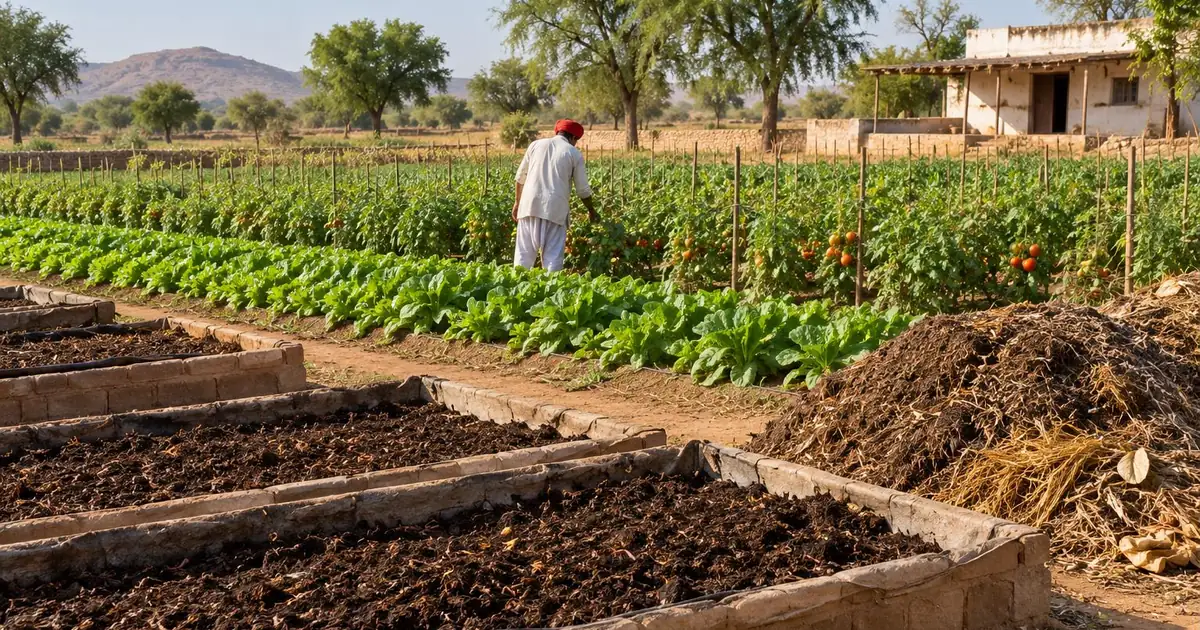
Demand for organic food is growing in Indian cities and abroad, and many farmers in Rajasthan already farm with low chemical use. But to sell produce as 'organic', farmers need recognised certification. India has two main systems: PGS-India for the domestic market and NPOP for exports and large buyers. This guide explains the difference and how to get started.
Under the food safety rules of FSSAI, organic food sold in India must be certified under one of the recognised systems, with only small producers selling directly to consumers exempted. Certified products can carry the Jaivik Bharat logo, which helps buyers trust the label. Certification also opens doors to organized retail, processors and export markets that pay a premium.
PGS-India: group certification for the domestic market
The Participatory Guarantee System (PGS-India) is a farmer-centred system run under the Ministry of Agriculture and Farmers Welfare through the National Centre for Organic and Natural Farming. Farmers form local groups, inspect each other's farms, keep records and take collective responsibility for compliance. Costs are low and paperwork is simpler, which suits small farmers and FPOs. PGS certification is valid for sale in the domestic market, but not for export. Government schemes such as Paramparagat Krishi Vikas Yojana have supported PGS clusters in many states.
NPOP: third-party certification for exports
The National Programme for Organic Production (NPOP), administered by APEDA under the Ministry of Commerce, uses accredited third-party certification bodies. An inspector visits the farm, checks records and may test samples. NPOP certification is needed for exporting organic products and is often required by large domestic buyers. It costs more than PGS, so smallholders usually apply as a grower group with an internal control system.
The conversion period
Land does not become organic overnight. Under NPOP, the conversion period is generally two years for annual crops and three years for perennial crops, and PGS-India follows a similar multi-year conversion before full organic status. During conversion, farmers must follow organic practices but cannot yet sell produce as fully organic. Planning finances for these years is important, as yields can dip before soil health improves.
Costs and support to plan for
Certification has direct costs, such as inspection and certification fees under NPOP, and indirect costs, such as compost preparation, bio-inputs, record keeping and possible lower yields during conversion. PGS-India keeps fees low because farmers inspect each other. Ask your agriculture department or KVK about schemes that currently support organic clusters, training and certification, and keep a simple budget for the full conversion period so that the farm stays financially healthy until organic premiums begin.
Practices and records inspectors look for
- No synthetic fertilisers, pesticides, herbicides or GMO seeds.
- Use of compost, vermicompost, green manure, crop rotation and bio-inputs.
- Buffer zones or barriers to prevent drift from neighbouring conventional fields.
- Clean storage and separate handling of organic produce.
- A farm diary recording inputs, field activities, harvest and sales.
Good records are often the difference between passing and failing an inspection.
Choosing the right route
If you sell in local and domestic markets and work with a farmer group, PGS-India is usually the practical start. If you plan to export, supply processors with export orders or sell to buyers who demand third-party certification, choose NPOP, ideally as part of an FPO or grower group to share costs. ATTPL Consultancy's certification services can help organisations understand documentation, and our small agri-processing unit guide explains how to add value to certified produce.
Selling certified organic produce
Certified farmers can sell through organic retailers, online platforms, processors, exporters and farmer markets. Packaging, grading and traceability add value. Groups that pool produce get better bargaining power; ATTPL's agri marketplace and women agripreneur programme support farmers and rural entrepreneurs in reaching buyers. Logistics for bulk organic produce can be planned with ATTPL Fleet.
Start your organic journey
ATTPL Agritech supports farmers and FPOs with advisory, market linkages and technology. Contact us to discuss organic conversion and certification for your farm or group.
Frequently asked questions
Can I export produce certified under PGS-India?
No. PGS-India certification is for the domestic market. Exports need NPOP certification through an accredited certification body.
How long does organic conversion take?
Under NPOP, generally two years for annual crops and three years for perennial crops. PGS-India also requires a multi-year conversion.
Do small farmers need certification to sell organic produce?
Small producers selling directly to consumers are exempted under FSSAI rules up to a notified limit, but certification is needed to sell through retailers and larger buyers.